Why Bhangarh Feels Different After Sunset
Most people imagine Bhangarh at night as a stage for something supernatural.
Whispers. Figures. Movement in the dark.
But if you strip away the story and look at the place as it actually is, something else takes over.
So what happens inside Bhangarh after sunset is not one single event. It is a shift from visibility to darkness, from human noise to natural sound, from tourism to isolation.
Not mystery. Not ghosts.
Something more physical. More immediate. More real.
What happens at Bhangarh after sunset is not a haunting.
It’s the complete return of the landscape.
The First Change: Darkness Doesn’t Fade, It Drops
In a city, darkness is gradual.
There’s always spill light. A glow. A reference point.
Bhangarh doesn’t work like that.
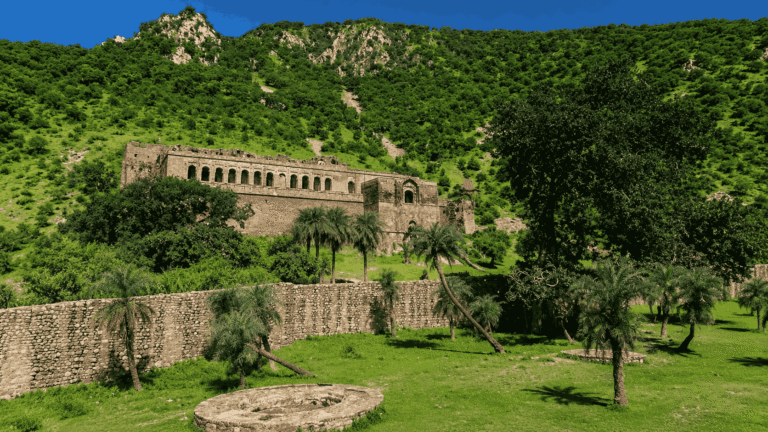
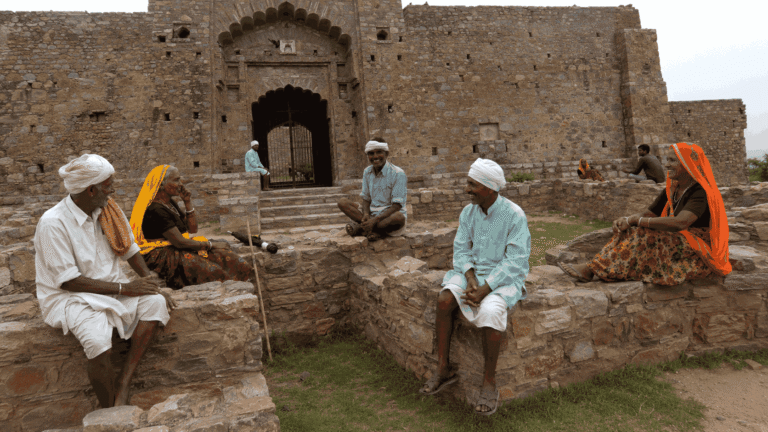
The fort sits within the Aravalli Hills, surrounded on three sides. As the sun dips behind them, light doesn’t taper—it gets cut off.
Within minutes:
– The stone structures lose detail
– Depth disappears
– Edges flatten into shadow
The Royal Palace, visible from a distance during the day, becomes a shape without definition.
Then a silhouette. Then nothing.
There is no artificial lighting. No distant city glow.
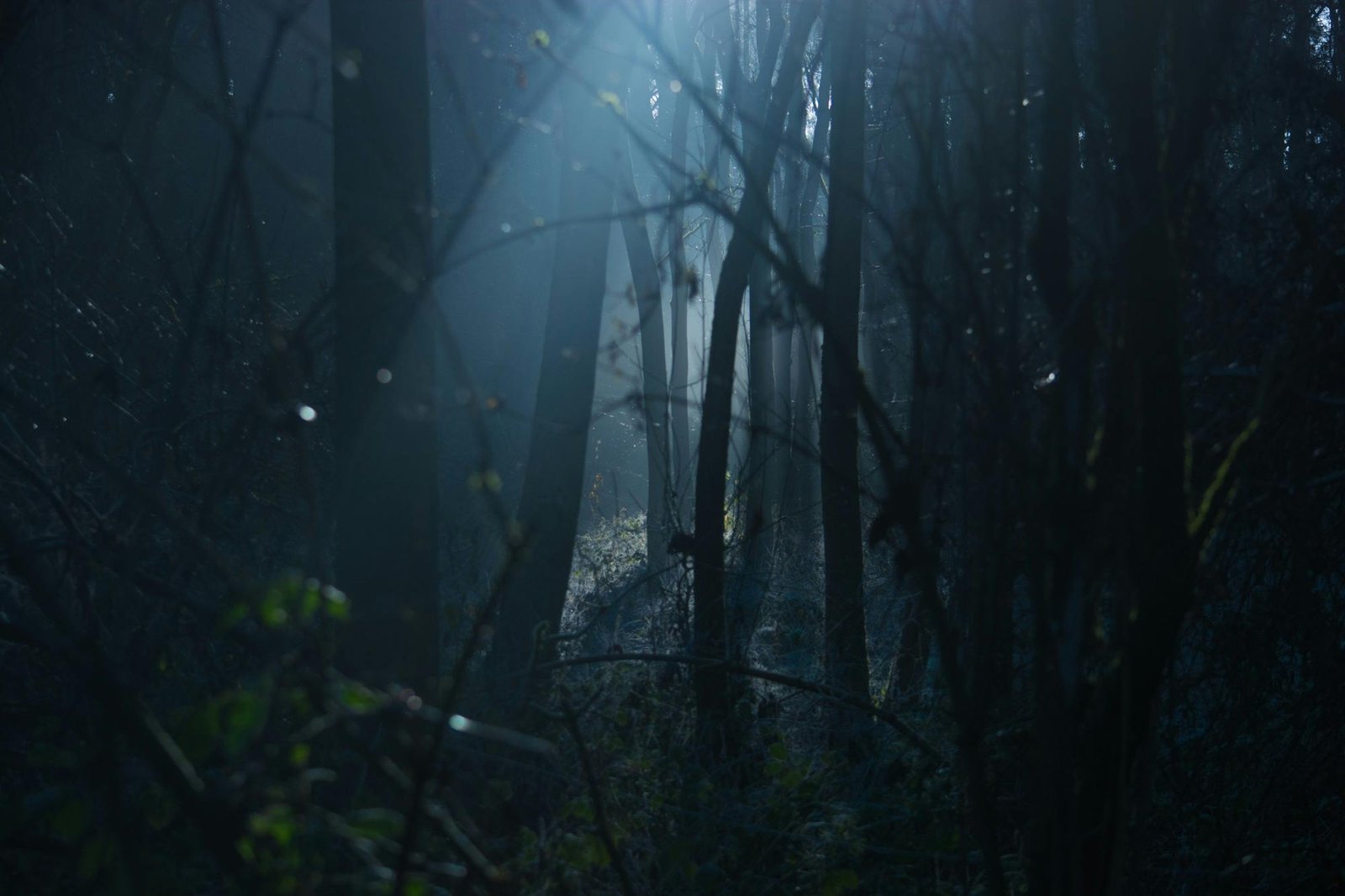
What remains is near-total darkness.
What That Does to Your Senses
Once visibility drops, your body compensates.
Vision becomes unreliable.
So you shift to:
– Touch
– Sound
– Spatial memory
This is sensory reduction, close to sensory deprivation in effect.
If you were inside:
– You would trace walls to navigate
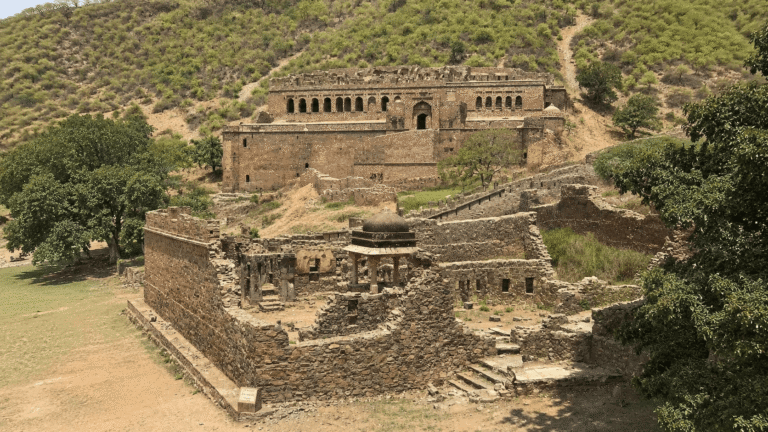
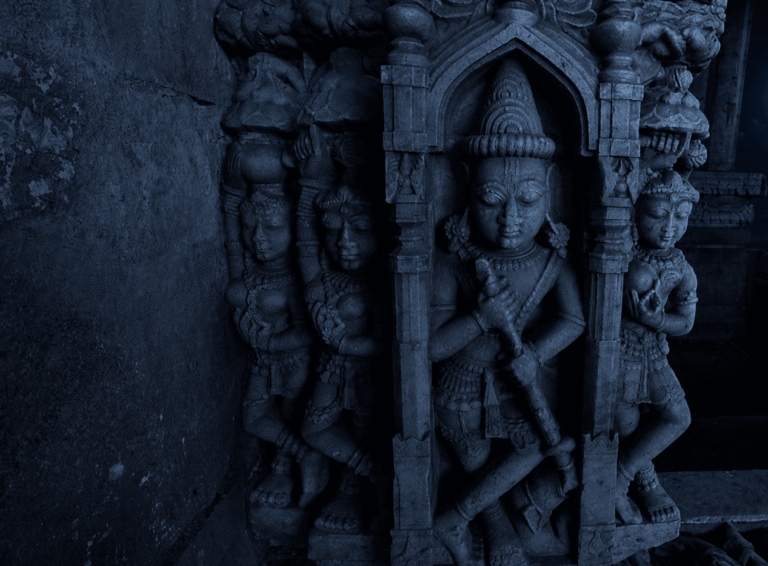
– Feel the rough edges of Jauhari Bazaar structures
– Sense open space without clearly seeing it
At that point, the environment stops being visual. It becomes physical.
The Soundscape Changes Completely
During the day, Bhangarh carries human sound.
Voices. Movement. Footsteps.
At night, that disappears.
But it doesn’t become silent.
It becomes something else.
From Human Noise to Biological Sound
The first noticeable shift would be overhead.
Bats.
The palace interiors house large bat populations. As night sets in, they move.
You’d hear:
-Sudden wing movement
– A collective, rushing sound
i- Iregular bursts of activity
It’s not subtle. It’s immediate.
Then Comes the Distance
Beyond the structures, the surrounding environment becomes audible.
Bhangarh borders the Sariska Tiger Reserve ecosystem.
That means after dark, the acoustic layer changes to:
– Distant animal calls
– Movement you can’t see
– Abrupt, isolated sounds
For example: the bark of a sambar deer, a known alarm call, territorial vocalizations from predators like leopards (not commonly seen, but present in the region)
These are normal ecological signals. But without visual confirmation, they feel amplified.
The Wind Becomes a Factor
The Aravalli terrain funnels wind through broken structures.
Especially through:
– Roofless market rows
– Palace openings
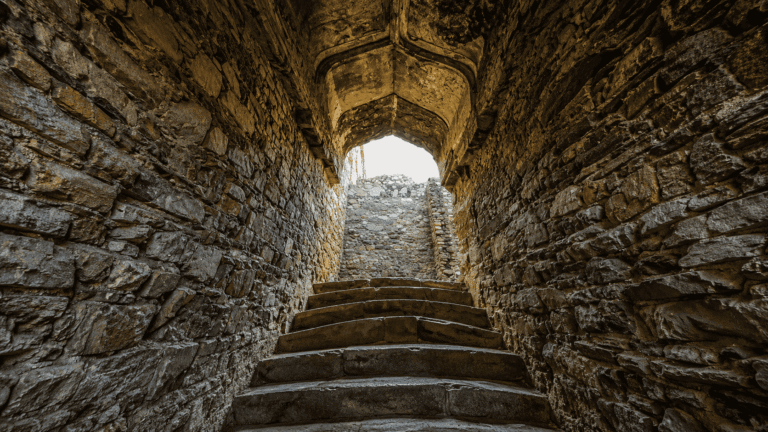
– Corridors and archways
This creates:
– Low-frequency hums
– Whistling effects
-Irregular sound patterns
In a quiet environment, this can feel like: something moving with intention
Even though it’s just air interacting with structure.
Temperature Doesn’t Stay Stable
During the day, the stone absorbs heat.
At night, the air cools quickly—but the structures don’t.
This creates thermal variation.
If you were moving through the palace or inner corridors, you would experience:
warm surfaces radiating stored heat
sudden cold air moving in from open areas
abrupt shifts in temperature across short distances
These are often described as:
– Cold spots
– Something passing by
In reality, they are air movement interacting with heat-retaining stone.
The Real Dominance Shift: Humans Leave, Nature Doesn’t
The biggest change is not darkness.
It’s absence of humans.
The ASI sunset restriction ensures that:
– No tourists remain
– No staff remain
no human activity continues
What’s left is:
– Terrain
– Wildlife
This is no longer a human environment. And your brain reacts to that.
Because humans are not designed to feel comfortable in spaces where they are not the dominant presence.
The Psychological Weight of Isolation
Now add scale.
Bhangarh is not a small ruin.
It is a full, planned city.
Designed for thousands.
At night, it holds none.
That mismatch creates a specific effect:
– Architecture implies presence
– Reality delivers absence
Your brain tries to reconcile that. It doesn’t succeed.
So it creates a substitute: the feeling that something is there
Not because something is.
Because something should be, and isn’t.
Why Shadows Feel Like Movement
In low light, your visual system switches to pattern detection.
But with limited data, it overcompensates.
So:
– Tree roots from banyan trees look like limbs
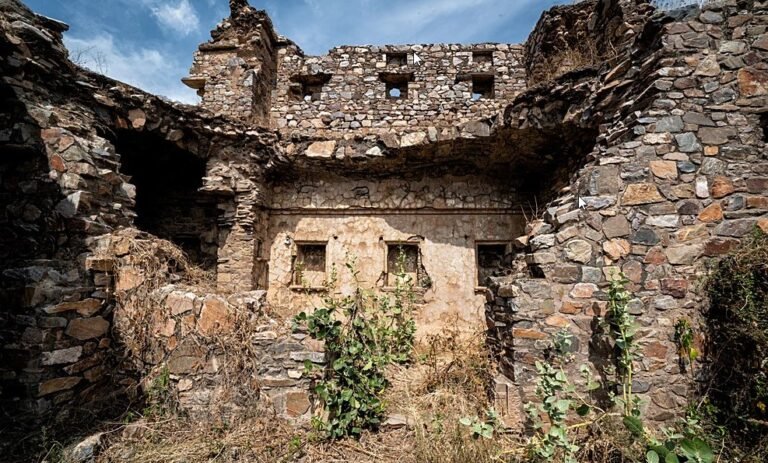
– Broken walls resemble figures
– Openings feel occupied
This is not imagination. It’s pattern completion under uncertainty.
Why the Experience Feels Intense
Combine everything:
– Total darkness
– Unpredictable sound
– Temperature shifts
– Lack of human reference
– Environmental ambiguity
– Expectation from stories
That’s enough to create a fully immersive experience.
Not supernatural. But deeply physical.
Why the Site Is Restricted After Sunset
The night restriction is not symbolic. It’s practical.
For official visitor context, Bhangarh Fort is also listed by Incredible India as a historic site in Alwar, Rajasthan.
After dark, Bhangarh becomes:
– Difficult to navigate
– Visually disorienting
– Potentially unsafe due to terrain
– Part of an active wildlife zone
That’s why entry is prohibited. Not because something paranormal has been verified.
Final Thought
So what is Bhangarh like at night?
Not a haunted stage.
Not a ghost site.
A dark, isolated, wildlife-adjacent ruin where:
– Human systems shut down
-Natural systems take over and the brain struggles to adapt
The intensity comes from that shift.
From losing control of the environment.
From being in a place that no longer belongs to you.
And once that happens, it doesn’t take much for the mind to start adding its own explanations
Read Next:
- Real Story of Bhangarh Fort: Beyond the Legends
- Bhangarh Curse Explained: Ratnavati, Singhia, and the Legend
- Why Is Entry Prohibited After Dark in Bhangarh?
For more articles on paranormal phenomena & haunted places, explore the Myth Vs Reality Hub