The Question
Everyone asks the same question the moment they hear it.
If Bhangarh Fort is just an old ruined fort in Rajasthan, then why is nobody allowed inside after sunset?
Why does the government close it at night?
Why are there warning boards?
And if the place is not genuinely dangerous in some supernatural sense, why does the restriction exist at all?
It is easy to see how the rumors begin. A fort already wrapped in ghost stories. A formal ban after dark. Guards asking people to leave before evening. For many visitors, that combination feels like confirmation.
As if the authorities know something they are not saying.
But the actual answer to why Bhangarh Fort is closed at night is less mysterious than the internet makes it sound.
And, in some ways, more practical.
The Official Rule Is Real
Yes—entry into Bhangarh Fort is restricted after sunset.
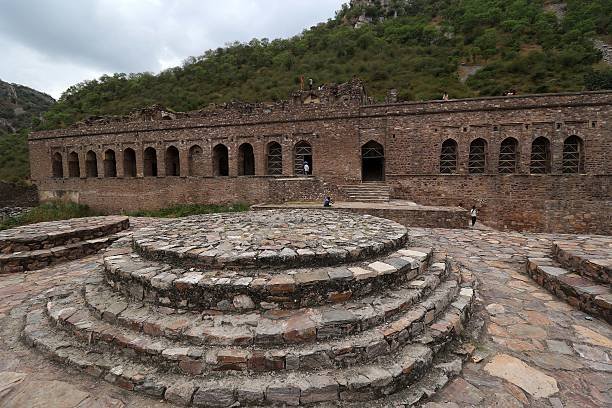
Visitors are generally required to leave before dark, and the site is not open for overnight access. This restriction is commonly associated with notices at the fort under the management of the Archaeological Survey of India (ASI), the government body responsible for protecting many of India’s historic monuments.
That part is factual.
The fort does close.
The ban exists.
But nowhere does the official restriction state that this is because of paranormal danger, curses, or supernatural activity.
That claim has been layered onto the rule by tourism folklore and internet repetition.
Not by the government.
So Why Is Bhangarh Fort Closed at Night?
The simplest explanation is the most likely one:
Because it is an isolated archaeological ruin in a partially forested area, and allowing unrestricted public access after dark creates obvious problems.
Several, in fact.
1. Safety in an Unlit Ruin Is a Real Concern
Bhangarh is not a modern tourist complex.
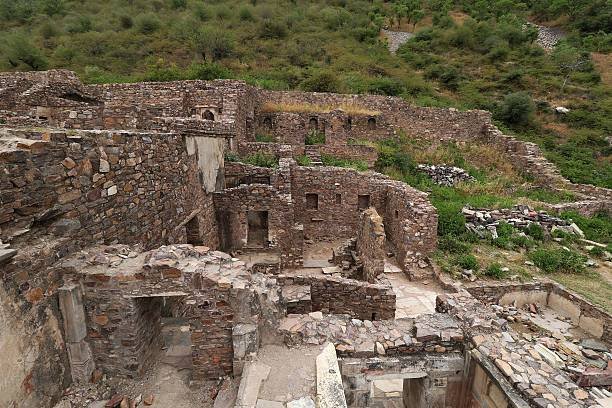
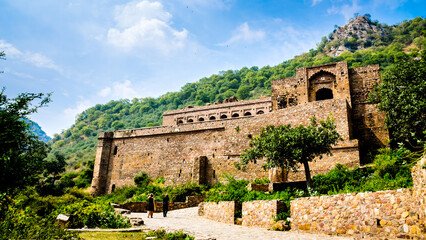
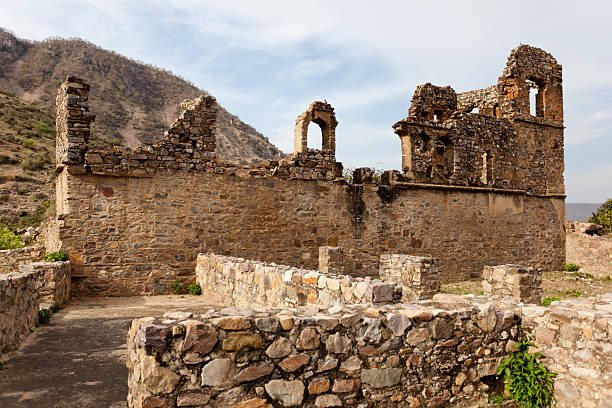
It is a large spread of ruined structures, uneven pathways, broken stairways, unstable stone sections, and open drops.
In daylight, visitors can navigate it relatively easily.
At night, with minimal lighting and rough terrain, that same environment becomes significantly more hazardous.
People romanticize haunted ruins until they trip on loose stone in complete darkness.
Then it becomes a liability issue.
And that matters more than people think.
2. The Surroundings Are Semi-Forested and Wildlife Is Present
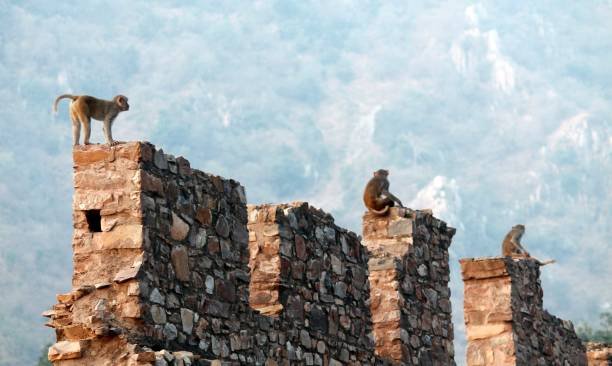
Bhangarh sits near the edge of the Sariska region, with forested surroundings and wildlife movement in the broader area.
Visitors and locals regularly mention:
monkeys
peacocks
stray animals
occasional reports of more serious wildlife in surrounding terrain
Whether or not large predators are commonly present directly inside the fort grounds is less important than this basic reality:
Allowing tourists to wander an abandoned, semi-isolated ruin at night in a wildlife-adjacent zone is not good management.
Especially in Rajasthan, where many heritage sites sit near natural terrain rather than urban centers.
3. Preservation and Vandalism Concerns
Historic monuments are fragile.
Night access increases the risk of:
vandalism
theft
trespassing into restricted areas
damage to protected structures
unauthorized gatherings / drinking / misuse of the site
This is not unique to Bhangarh.
Many archaeological and heritage sites across India and globally restrict late access for exactly these reasons.
Bhangarh’s haunted reputation just makes its restriction seem more dramatic.
4. Remote Location Means Limited Emergency Response
Another practical issue: Bhangarh is relatively isolated.
If someone is injured inside the ruins at night—
by a fall
by animal encounter
by structural collapse
by panic / disorientation
—responding quickly is harder than it would be in an urban tourist site.
From a bureaucratic perspective, the cleanest solution is simple:
Close the site before dark.
Avoid the problem entirely.
Then Why Do People Think the Closure Is Because of Ghosts?
Because the restriction fits the myth too perfectly.
That is really the reason.
A fort already known across India for its haunted reputation becomes far more compelling the moment people hear:
“The government itself bans entry after sunset.”
That sounds like confirmation.
It sounds official.
It sounds like hidden proof.
But psychologically, people are connecting two separate things:
A real administrative restriction
An existing supernatural legend
The human brain loves pattern-making. Especially when fear is involved.
So the practical explanation often gets ignored in favor of the more dramatic one.
What Happens in Bhangarh Fort at Night, Then?
Depends who you ask.
Believers will tell you:
voices are heard
strange presences are felt
no one who stays survives
paranormal activity increases after dark
But those claims remain part of oral folklore and modern tourist storytelling.
There is no verified public evidence showing documented supernatural events at Bhangarh after sunset.
What likely happens in Bhangarh Fort at night is much less cinematic:
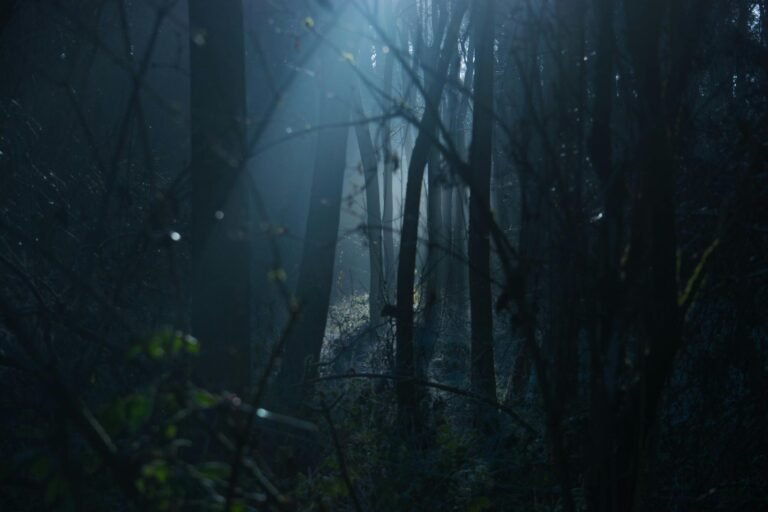
the ruins become pitch dark
wildlife becomes more active
the fort grows unnervingly quiet
visibility drops sharply
the architecture feels more oppressive
ordinary sounds become harder to place
And in a place already loaded with expectation, that atmosphere does the rest.
Fear rarely needs much help.
Why the Rule Made the Legend Stronger
The closure did not create Bhangarh’s mythology on its own.
But it amplified it.
Massively.
Because once a place has both:
a haunted backstory
and a formal sunset restriction
…the public tends to merge the two into a single narrative.
Soon the practical rule becomes retold as:
“The government knows the place is haunted.”
Then that becomes:
“People died there after dark.”
Then:
“Nobody who stays survives.”
That is how folklore evolves.
Not through one dramatic event.
Through repetition, escalation, and retelling.
Can You Stay in Bhangarh Fort at Night?
Officially, no.
Visitors are not permitted to remain inside after the site closes.
Unauthorized overnight entry would mean trespassing into a protected archaeological zone.
Whether some people attempt it anyway is another matter.
But legally and officially, public night access is not permitted.
So Is the Night Ban Proof That Bhangarh Is Haunted?
No.
At least not in any evidentiary sense.
The existence of a sunset restriction proves only that:
the fort closes at night
authorities consider night access undesirable or unsafe
the site is managed under standard heritage preservation logic
It does not prove the government recognizes supernatural danger.
That leap is made by folklore, not documentation.
Why The Question Persists
Because practical explanations rarely kill a good myth.
In fact, sometimes they make it stronger.
Telling people that Bhangarh Fort closes because of preservation policy and wildlife concerns may be rationally convincing. But emotionally, it struggles to compete with:
“No one is allowed inside after dark because something happens there.”
One explanation is administrative.
The other is irresistible.
And Bhangarh has survived precisely because people prefer the second version.
Final Thought
So—why is Bhangarh Fort closed at night?
Because it is an isolated archaeological ruin with safety, preservation, and management concerns, not because any official body has declared it supernaturally dangerous.
But the rule has done something powerful nonetheless.
It has given the legend institutional-looking weight.
And once a haunted story gains that kind of reinforcement, it stops feeling like folklore to many people.
It starts feeling like evidence.
Even when it isn’t.
Final Thought
So, is Bhangarh Fort safe to visit?
Yes—during the day, with basic awareness, it is safe for tourists.
There is no verified supernatural danger associated with the site.
But like any abandoned historical ruin, it carries real, physical risks tied to terrain, structure, environment, and isolation.
Understand those, respect the space, and the visit becomes what it’s meant to be:
An atmospheric, unusual, and memorable place—not a dangerous one.
Read Next:
- Want to understand how Bhangarh became India’s most infamous haunted fort in the first place?
Read next: The Curse of Bhangarh: How the Legend Began and Why It Endures
Or explore the full story behind the myth on our Bhangarh Film Page.