
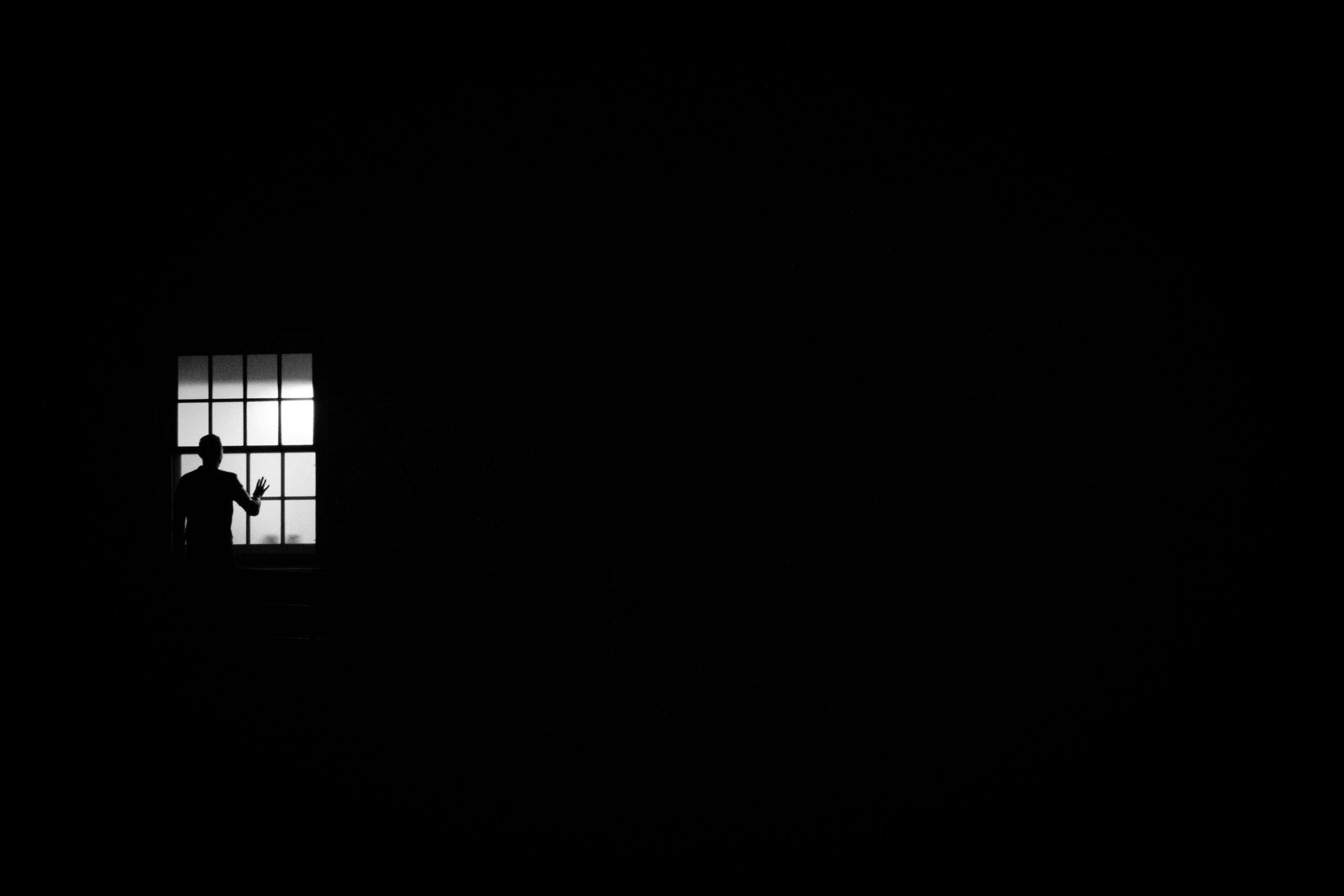
Why do we see things in the dark even when nothing is there?
Why we see things in the dark has less to do with ghosts and more to do with how the brain handles missing information. In low light, shapes become unstable, shadows lose detail, and your visual system starts guessing. A shadow shifts. A form appears at the edge of your vision. You look again. Nothing.
But the impression remains: something was there.
A shadow shifts.
A shape feels unstable.
Something seems to move at the edge of your vision.
You look again.
Nothing.
Why we see things in the dark has less to do with ghosts and more to do with how the brain handles missing information. In low light, shapes become unstable, shadows lose detail, and your visual system starts guessing.
A shadow shifts.
A form appears at the edge of your vision.
You look again.
Nothing.
But the impression remains: something was there.
This is one of the most common human experiences in low light. It does not require anything supernatural to explain it. Sometimes, the brain’s guesses look real.
And yet the impression lingers: There was something there.
This is one of the most common human experiences in low light. And it doesn’t require anything supernatural to explain it.
Why we see things in the dark comes down to how the brain handles missing information. When light drops, your visual system doesn’t switch off, it starts guessing.
Sometimes, those guesses look real.
Your Eyes Still Send Signals in Darkness
Even in complete darkness, your visual system is still active.
The retina continues to fire tiny electrical signals. These signals don’t come from light—they come from the system itself.
You may notice them as:
– Faint flashes
– Drifting dots
– Soft patterns or waves
These are called phosphenes, a kind of internal “visual noise.” They’re harmless.
But they give the brain raw material to work with.
When Input Drops, the Brain Fills the Gaps
This is one major reason why we see things in the dark: the brain is not receiving enough detail, so it completes the scene with memory and expectation.
In bright conditions, your brain processes detailed, stable images.
In low light, that detail disappears.
Edges blur, depth weakens & contrast drops.
The visual cortex, the part of the brain that interprets what you see, gets less reliable input. It doesn’t like that.
So it compensates. It starts to fill in missing information using memory, expectation, and probability.
That’s when neutral shadows can become:
– A person standing
– Something moving
– A shape that wasn’t there a second ago
A hanging cloth becomes a shoulder.
A door gap becomes a face.
A tree branch becomes a hand.
A moving shadow becomes someone watching.
Not because something changed—but because your brain completed the picture.
Pareidolia: Seeing Meaning in Random Patterns
Pareidolia is another reason why we see things in the dark, especially faces, figures, and human-like shapes.
Humans are wired to recognize patterns fast, especially faces and figures.
This is called pareidolia.
It’s why you can see:
– A face in a wall stain
– A figure in a curtain
– A person in a cluster of shadows
In the dark, pareidolia becomes stronger. Why?
Because the brain would rather over-detect a threat than miss a real one.
So it turns vague input into something familiar.
Often, something human.
Why Shadows Look Like They Move in Low Light
In darkness, your eyes rely more on peripheral vision.
That part of your vision is good at detecting motion, but poor at detail.
So what happens?
A slight shift in shadow, a flicker of light, a change in contrast…gets interpreted as movement.
You didn’t “see” something move clearly.
You inferred that it moved.
That’s why people often say: “I thought something moved over there.”
The key word is thought.
Sensory Deprivation Makes the Brain Louder
In very dark, quiet environments, something else happens.
The brain has less external input.
So internal activity becomes more noticeable.
This is called sensory deprivation.
When it increases, people may experience:
– Stronger visual noise
– More vivid imagined shapes
– Heightened awareness of small stimuli
In simple terms: When the outside world goes quiet, the brain fills the space.
Hypnagogic and Hypnopompic Hallucinations in the Dark
Sometimes, what you see in the dark isn’t about the environment at all.
It’s about your state of mind.
As you fall asleep or wake up, the brain can briefly produce vivid imagery.
These are called:
hypnagogic hallucinations (as you fall asleep)
hypnopompic hallucinations (as you wake up)
They can look real. Immediate. Detailed.
And because they happen in low light, they often get connected to the environment around you.
Even though they’re internally generated.
Fatigue and Stress Make It Worse
When you’re tired or stressed, your brain becomes less precise in interpreting visual data.
That means:
– More guessing
– More pattern completion
– More misinterpretation
So you’re more likely to:
– Mistake shadows for shapes
– Interpret movement that isn’t there
– Feel like something is present
The environment didn’t change. Your processing did.
Why It Feels So Convincing
Here’s the important part.
These experiences don’t feel like imagination.
They feel real.
Because they are processed through the same system that handles actual visual input.
So when your brain creates or completes an image, it doesn’t label it clearly as “generated.”
It just presents it. And you react to it.
Why This Feels Stronger in Haunted Places Like Bhangarh
This is why the effect becomes stronger in haunted or abandoned places.
These locations often combine low light, uneven structures, silence, and expectation.
Bhangarh is a useful example.
In the evening, the fort has broken structures, changing shadows, animals moving through ruins, and a strong cultural expectation of something unusual.
Your brain is already receiving limited visual input and scanning for threat.
So when a shadow looks like a figure or a shape changes when you look directly at it, the experience feels meaningful.
But the mechanism is still the same: incomplete information plus active interpretation.
When Should You Be Concerned?
Occasional visual misinterpretation in low light is normal.
But frequent vivid hallucinations, clear images in full light, persistent visual disturbances, or symptoms that interfere with daily life should be discussed with a qualified medical professional.
Those cases may involve migraine aura, visual processing conditions, medication effects, sleep issues, or neurological factors.
That is different from normal low-light misperception.
Final Thought
So why we see things in the dark is not a mystery of the eyes alone.
It is a combination of low light, weak signals, memory, expectation, and the brain’s habit of filling gaps.
Because the brain doesn’t wait for perfect information.
It builds a version of reality from whatever it has.
In low light, that means:
– More guessing
– More pattern recognition
– More filling of gaps
And sometimes, those guesses look like something is there.
Even when nothing is.
The experience is real. The source is internal.
And once you understand that, the darkness doesn’t lose its intensity—
it just becomes easier to read.
Read Next:
- The Psychology of Haunted Places: Why Expectation Changes What You Feel
- Why Empty Places Feel Haunted: The Psychology Behind Bhangarh’s Eerie Atmosphere
- Bhangarh Expectation vs Reality: What People Actually Feel Inside the Fort
For more articles on Bhangarh, haunted places, and Indian supernatural legends, explore the Myth Vs Reality Hub