A Walk Through the Experience
The Bhangarh Fort experience does not begin with instant fear.
Most people expect a jolt, a chill, or something unmistakable the moment they enter.
That is not what usually happens.
The place works slowly.
First, you notice the official warning. Then the temple. Then the roofless market. Then the animals, the smell, the silence, and the way the space changes as you move deeper.
The first thing Bhangarh gives you is not horror.
It is contrast.
TThe ASI Warning Sign at Bhangarh Fort
Before you even enter the ruins, you encounter something official.
A yellow signboard from the Archaeological Survey of India (ASI). This is the first psychological layer of the Bhangarh Fort experience.
Clear. Direct. Unambiguous:
– Entry is prohibited before sunrise and after sunset.
– No storytelling. No explanation.
Just a rule.
And that does something immediately. It plants a thought.
You haven’t seen anything yet but your mind is already asking: Why?
That question stays with you as you walk forward.
Entering Through Hanuman Gate
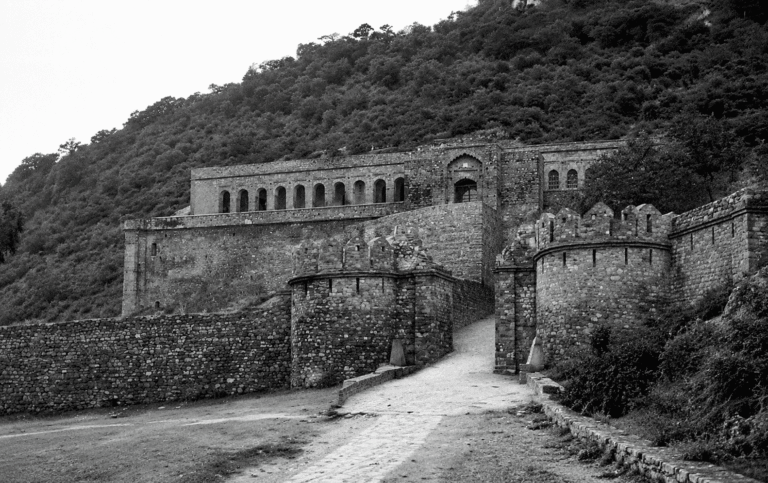
You pass through the main entrance Hanuman Gate.
And instead of emptiness, you find something familiar.
A temple.
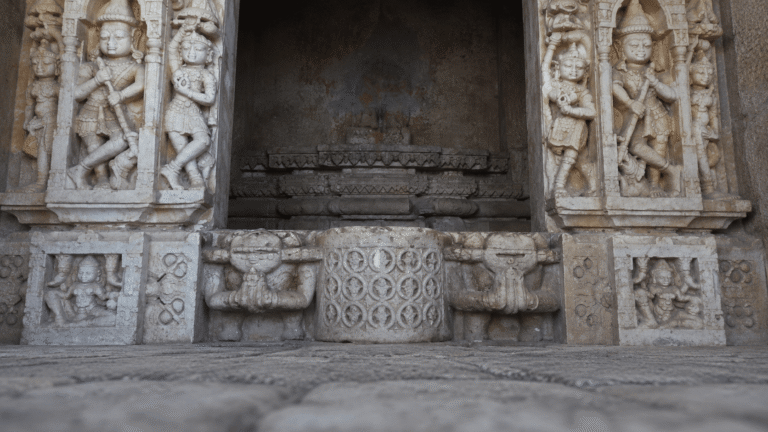
The Hanuman Temple: A Surprising Start
Right near the entrance sits an active Hanuman Temple.
It doesn’t feel abandoned.
The structure is intact, The roof is still there
You may see locals visiting. There are offerings, movement, presence
Around it, large banyan trees spread out, adding shade and density.
If you expected immediate decay, this interrupts that expectation.
It feels… normal.
Almost like you’ve entered a functioning space.
Which makes what comes next more noticeable.
The Transition: Order to Emptiness
Walk a little further.
And the environment shifts.
You’re guided into a long, straight stretch.
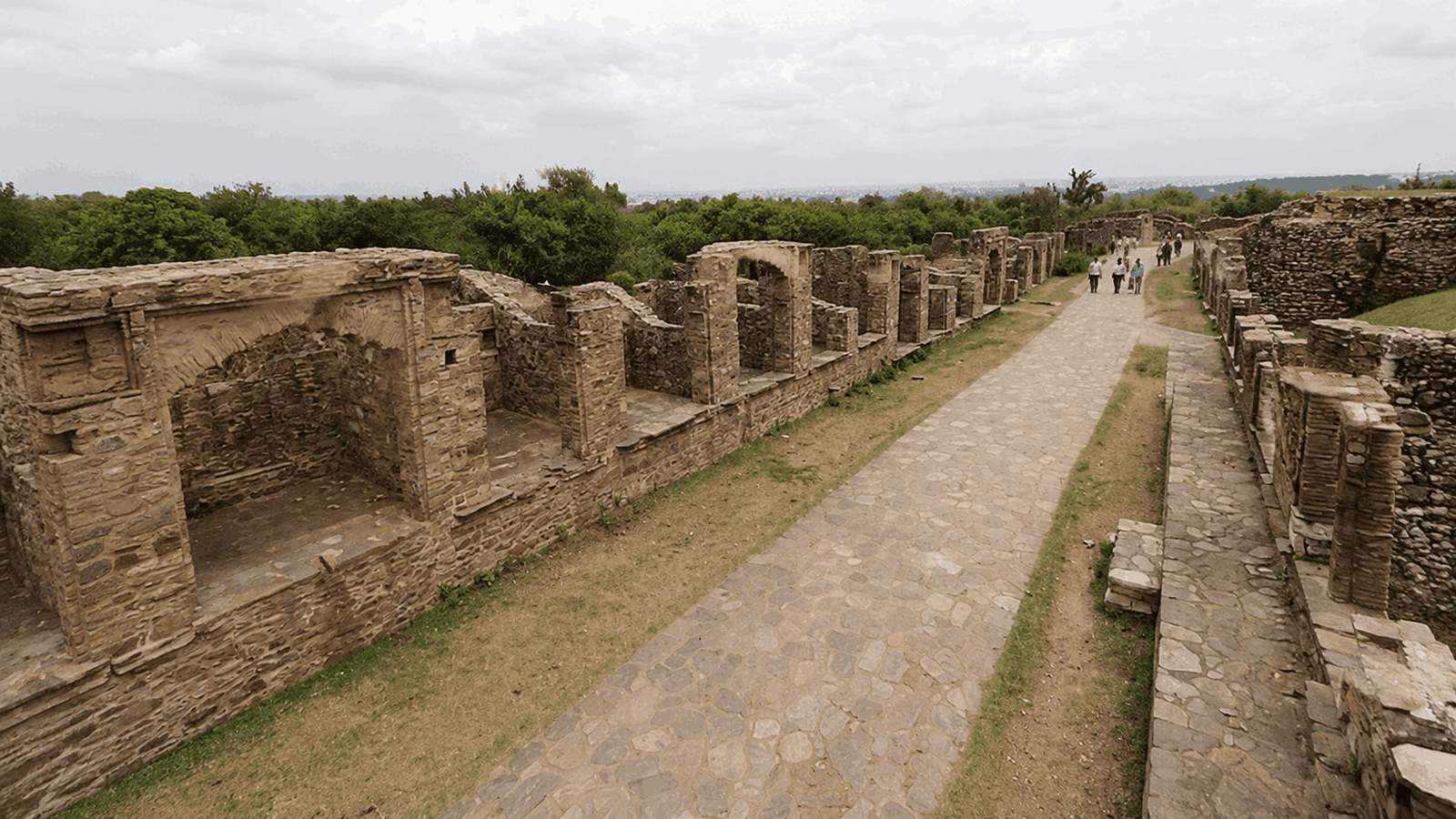
This is Jauhari Bazaar, the old marketplace.
The Marketplace Without a Roof
For many visitors, this roofless bazaar becomes the first truly memorable part of the Bhangarh Fort experience.
At first glance, it looks structured.
Symmetrical. Repetitive. Planned.
Rows of stone shops on both sides.
But then it hits you.
Every single one is missing its roof.
Not damaged randomly. Not partially collapsed.
Completely open.
Where the Feeling Starts
This is usually the first moment where something feels different.
Not fear. But unease.
Because your brain expects:
– Covered spaces
– Enclosed shops
– Defined interiors
Instead, you get:
– Exposure
– Emptiness
– Sky where there shouldn’t be sky
The symmetry of the street makes it even stronger.
It looks organized but incomplete.
That contradiction stays with you.
Life Inside the Ruins
Just as the space begins to feel empty, something interrupts it.
Movement. Not human.
Monkeys Everywhere
Bhangarh is full of Rhesus macaques and Hanuman langurs.
They sit on walls. Jump across structures.
Watch visitors without much concern.
They are the most active presence inside the fort.
And they change the experience.
Because suddenly:
– The place isn’t empty
– It’s occupied, just not by people
Sound That Doesn’t Match the Visual
Then there’s the sound.
You hear:
– Birds
– Rustling leaves
– Distant calls
Most notably, peacocks.
Their calls echo across the space, often becoming the dominant background sound.
And it feels slightly out of sync.
You’re in a silent ruin. But it isn’t silent.
It’s alive in a different way.
The Green Layer You Don’t Expect
Depending on the season, another thing stands out.
Greenery. Grass. Trees.
Overgrowth in parts of the ruins. It softens the stone.
And creates a strange mix:
– Decay
– Life
– Abandonment
– Activity
All at once.
Moving Deeper: The Shift Begins
As you move past the marketplace and toward the inner sections, the experience changes again.
Less open. More enclosed.
Structures get tighter. The palace comes into view.
And something else appears—not visually at first.
The First Non-Visual Signal: Smell
Inside and around the deeper chambers, especially near the palace, many visitors notice it.
A strong, heavy odor.
Not subtle.
Not occasional.
Consistent.
The Source: Bat Colonies
The lower sections of the palace and enclosed spaces are home to large bat populations.
Over time, that creates:
– Dense accumulation
– Limited airflow
– A persistent smell
This is usually the first moment where the experience shifts from visual to physical.
You’re not just observing anymore. You’re reacting.
From Open Space to Enclosed Darkness
The deeper you go:
– Light reduces
– Space tightens
– Visibility drops
You move from: wide, open ruin to narrow, darker interiors
This transition is subtle, but important.
Because your brain responds differently to enclosed environments.
Why Bhangarh Fort Feels Uneasy as You Go Deeper
By this point, most people report something.
Not dramatic. But noticeable. Alertness, slight discomfort, awareness of surroundings, sensitivity to sound
And here’s the key: This doesn’t come from a single moment.
It builds.
Why It Doesn’t Feel Instant
Bhangarh doesn’t overwhelm you at the entrance.
It layers the experience:
– Rule (ASI sign)
– Familiarity (temple)
– Structural contrast (marketplace)
– Unexpected life (animals)
Sensory shift (sound, smell)
Spatial compression (palace interiors)
Each step adds something. Until the place feels different.
The Real First Impression
So what do you notice first at Bhangarh?
Not fear. Not silence. Not emptiness.
You notice contrast between:
– Active and abandoned
– Structured and broken
– Open and enclosed
– Quiet and alive
And that contrast is what slowly turns into something else. That is why the Bhangarh Fort experience feels different from a normal fort visit. It is not one dramatic moment. It is a sequence of small contradictions.
Final Thought
Bhangarh doesn’t announce itself. It reveals itself.
One layer at a time.
By the time you start wondering whether the place feels “haunted,” you’ve already passed through:
– A normal entry
– A functioning temple
– A structured market
– Visible wildlife
– Sensory shifts
And somewhere in between, your perception changes.
Not because something happened. But because enough small things added up.
And that’s what makes the experience stay with you.
Read Next:
- Bhangarh Expectation vs Reality: What People Actually Feel Inside the Fort
- A Walk Through Bhangarh in the Afternoon (Real Experience)
- Real Story of Bhangarh Fort: Beyond the Legends
For more articles on Bhangarh, haunted places, and Indian supernatural legends, explore the Myth Vs Reality Hub