Real Story of Bhangarh Fort: History, Decline, and How It Became Famous
The real story of Bhangarh Fort is not just a curse, a princess, or a haunted warning. Everyone knows Bhangarh as the haunted fort.
That is the version that survives online. The version that dominates YouTube thumbnails, ghost-hunting videos, roadside conversations, and dramatic travel reels. Ask most people what happened there, and they will not begin with history. They will begin with curses:
– A tantrik.
– A princess.
– Black magic.
– A city destroyed overnight.
But if you are looking for the real story of Bhangarh Fort, the answer is more layered than that.
Because Bhangarh did not become famous for one reason.
It became famous because history, abandonment, folklore, and atmosphere gradually collapsed into one another until people stopped separating them.
That is what made the fort what it is now.
Not simply a ruin. Not simply a legend.
Something in between.
The Historical Beginning of Bhangarh Fort
According to Rajasthan Tourism Website, Bhangarh Fort was built in the 16th century and is associated with Madho Singh, connected to the Kachwaha rulers of Amber.
Historically, Bhangarh was not built as some cursed outpost.
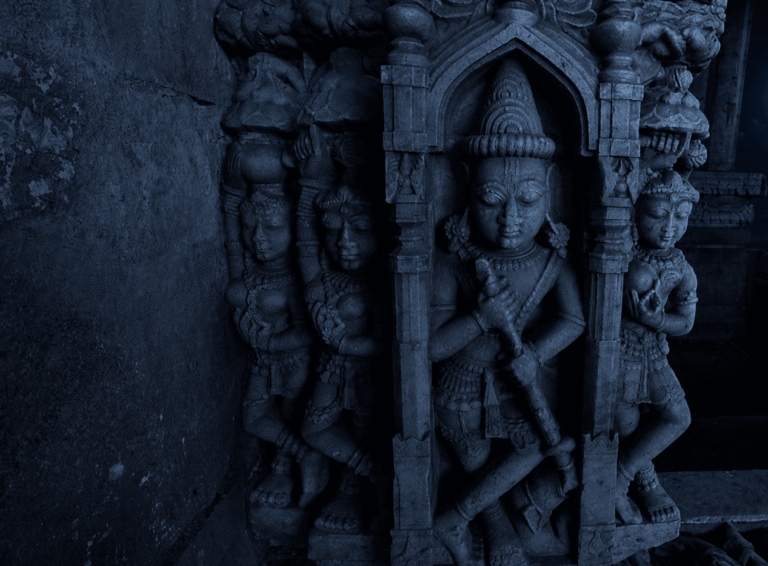
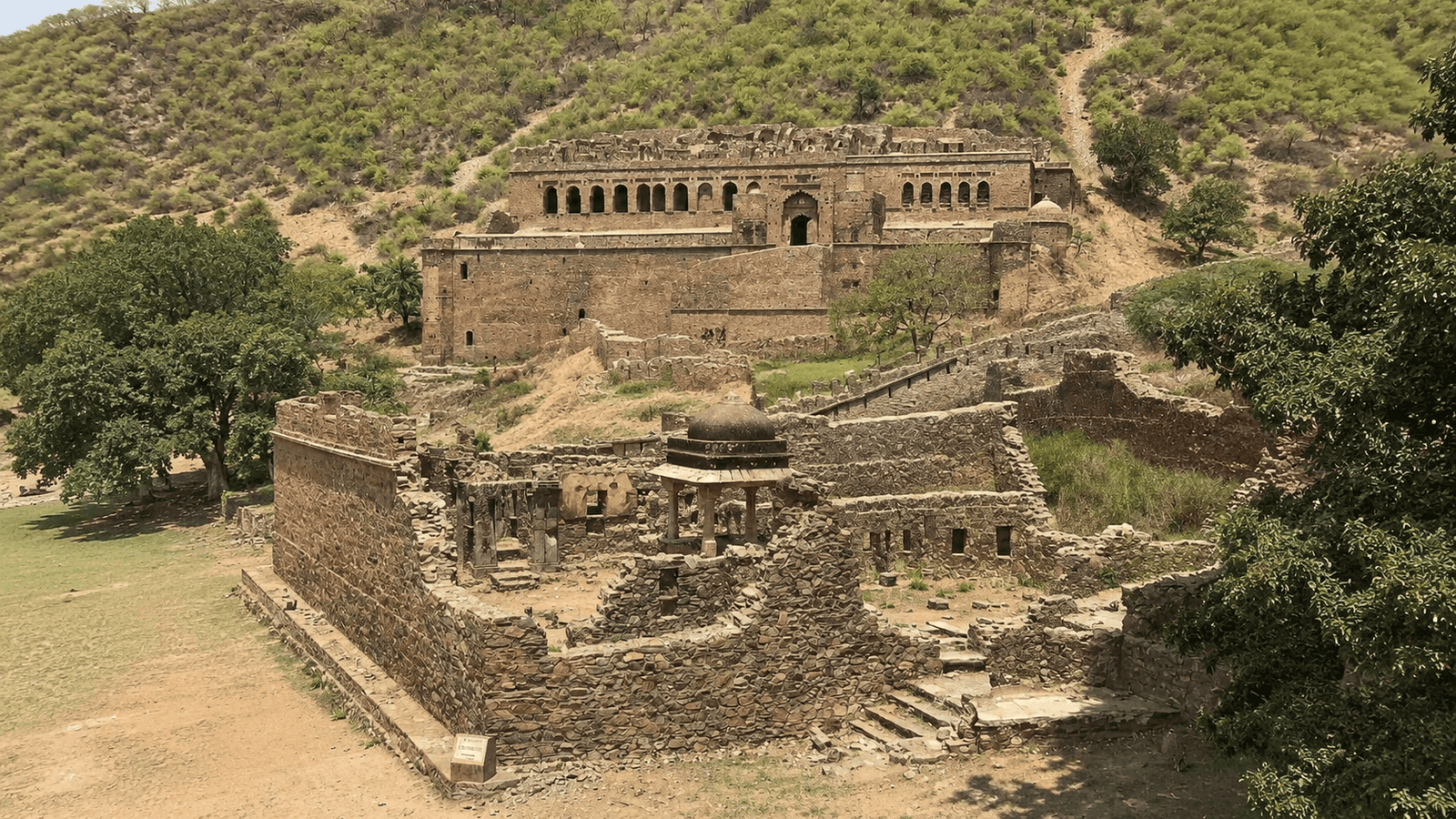
It was a planned settlement and fortified township—strategically positioned, commercially active, and significant enough in its time to support temples, markets, royal structures, and residential zones.
That part often gets lost.
People speak of Bhangarh as if it was always a haunted ruin. It was not.
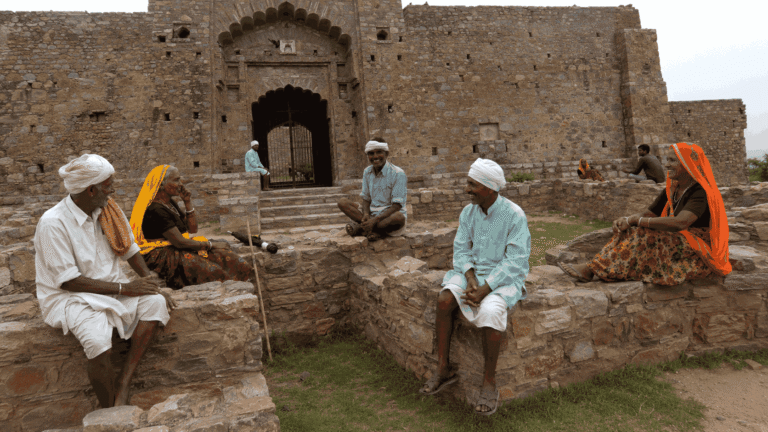
For a period, it was a functioning settlement with political and regional importance.
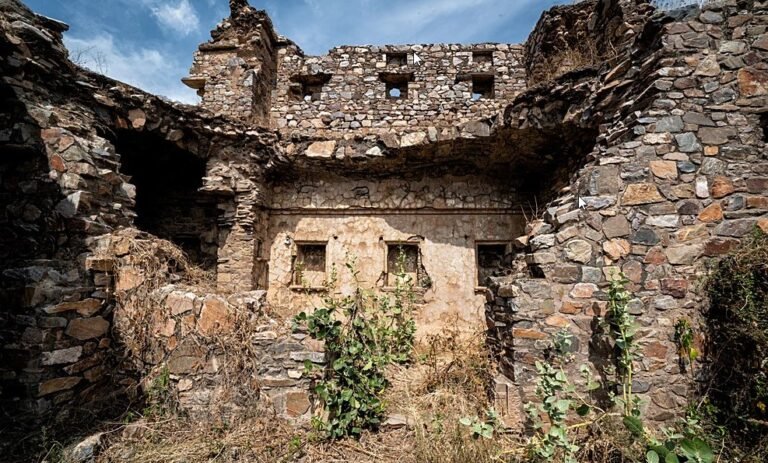
Its remains still reflect that. Even in decay, the site is far larger and more structured than many visitors expect.
So What Happened to Bhangarh?
This is where the myth and the historical record begin to split.
The honest answer is:
– There is no single universally accepted dramatic event explaining Bhangarh’s abandonment.
– No verified record says the city was wiped out overnight by a curse.
– No documented evidence proves supernatural destruction.
– No clear historical source confirms one catastrophic event ended the settlement.
Instead, what historians and researchers generally point toward is a more ordinary possibility: Bhangarh likely declined gradually due to a mix of regional political, economic, environmental, and strategic factors over time.
That is less cinematic.
But historically, that is how many settlements disappear.
Not through one spectacular disaster.
Through slow decline.
The Problem With the “Destroyed Overnight” Narrative
Many modern retellings suggest Bhangarh was suddenly annihilated in a single night after a curse was unleashed.
It is a compelling story. It is also not historically established fact.
There is no reliable evidence that the entire settlement was destroyed in one supernatural catastrophe.
What likely happened is more mundane:
– Shifting political centers reduced strategic importance
– Regional instability affected settlement viability
– Environmental/resource pressures may have contributed
– Populations gradually moved elsewhere over time
But that version of history does not travel as well as a curse story.
So the dramatic version survived.
The gradual one did not.
Then Where Did the Haunted Reputation Come From?
From the legends layered onto the ruins after history became unclear.
This happens often with abandoned places.
Once a settlement loses its original context, once records thin out, structures decay, and generations pass—people begin filling the gaps with story.
And Bhangarh had the perfect conditions for that:
– Large abandoned architecture
– Visible royal ruins
– A remote setting
– Silence and emptiness
– Unclear historical decline
– Striking visual atmosphere
When a place looks dramatic enough, people rarely leave historical ambiguity empty for long.
They mythologize it.
The Ratnavati and Tantrik Legends Changed Everything
Today, Bhangarh’s fame is tied most strongly to two connected folklore narratives:
– The Princess Ratnavati Legend
– The story that a beautiful princess of Bhangarh became the target of obsession by a tantrik, whose failed attempt to enchant her led to his death and a curse upon the city.
– The Tantrik Singhia Story
– The darker extension of the same myth, casting the tantrik as the architect of Bhangarh’s supernatural downfall.
Whether either story has firm historical basis is another matter.
There is no strong evidence proving these accounts as documented history.
They are best understood as folklore attached to the site after the fact.
But once those stories took hold, they transformed Bhangarh from abandoned fort into haunted landmark.
Why Bhangarh Feels More Haunted Than Other Ruins
There are many abandoned forts in Rajasthan.
Very few carry Bhangarh’s reputation. Why?
Because Bhangarh’s architecture and setting do unusual work for the myth.
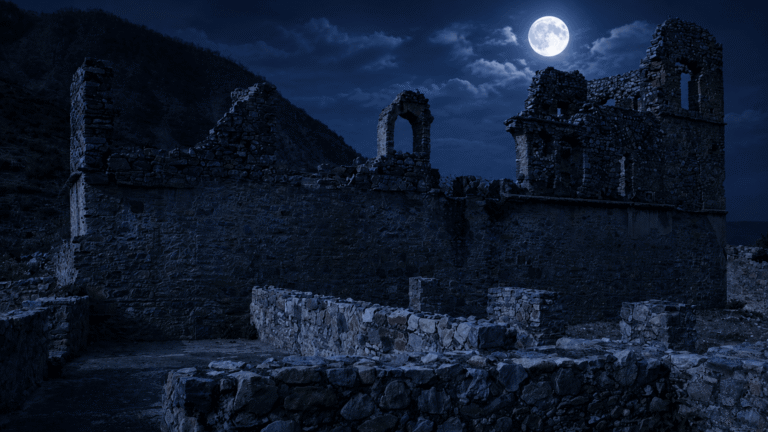
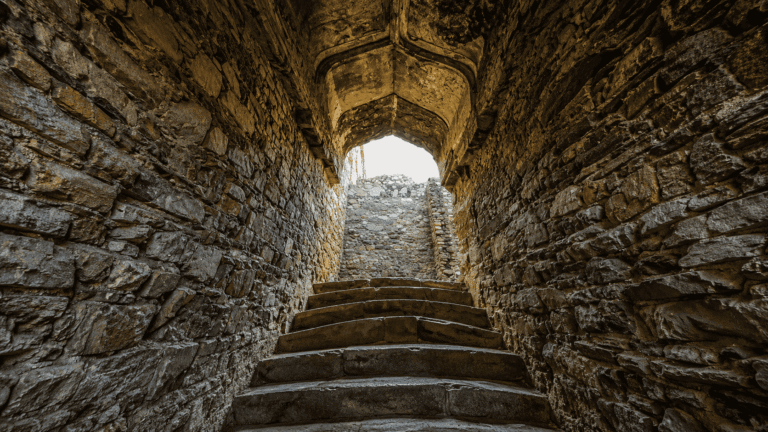
The fort is spread across a wide valley basin with layered ruins leading upward toward the main palace structure. The terrain gives visitors a long visual approach into emptiness. The structures feel exposed, silent, and strangely theatrical.
Even in daylight, the place carries a kind of stillness people notice immediately.
That matters.
Because fear often begins with atmosphere long before it becomes belief.
Bhangarh does not merely have a story attached to it.
It looks like a place that should have one.
And that visual compatibility between place and myth is powerful.
The Government Restriction Added Fuel to the Fire
Part of why Bhangarh became nationally famous rather than just locally infamous is the now widely repeated fact that entry is restricted after sunset.
That restriction, administered under archaeological management—has practical explanations tied to site safety, preservation, and security.
But in public imagination, it became something else entirely.
People heard: “No one is allowed inside after dark.”
And translated it into: “Even the government knows it is haunted.”
That leap, though unsupported by official explanation, massively strengthened the legend.
Suddenly the myth had what looked like institutional validation.
Whether deserved or not.
Why Bhangarh Became So Famous in Modern India
Bhangarh’s rise into mainstream notoriety is relatively modern.
Its current fame owes as much to media and tourism as to folklore itself.
Several factors accelerated its reputation:
– Television Paranormal Shows
– Ghost-hunting and mystery programs repeatedly featured the fort.
– Viral Internet Content
– YouTube, blogs, and social media amplified the site far beyond Rajasthan.
– Tourism Marketing by Reputation
– Urban Curiosity Culture: Modern audiences are drawn to “forbidden” and “haunted” places in ways previous generations were not.
Whether official or unofficial, the haunted label became inseparable from the destination.
The result is that Bhangarh’s fame today is partly self-reinforcing.
People visit because it is famous for being haunted.
Then they leave with stories that make it more famous.
So What Is the Real Story of Bhangarh Fort?
The most honest answer is this: The real story of Bhangarh Fort is not one clean explanation.
It is the intersection of:
– Documented regional history
– The rise and decline of a historical settlement
– Unclear abandonment over time
– Folklore created to explain that decline
– Atmospheric architecture and environment
– Modern tourism and media amplification
People often search for one “truth” behind Bhangarh.
A single answer.
But places like this rarely work that way.
The truth is usually messier.
History built the fort. Time emptied it.
Folklore reinterpreted it. Modern media immortalized it.
That combination is what made Bhangarh famous.
Not one ghost story.
Why The Myth Endures Even When History Is Available
Because facts explain structure. Stories explain feeling.
Knowing Bhangarh was founded under Madho Singh and later declined over time may answer the historical question.This matters because Bhangarh was a real political and urban settlement before it became a haunted destination.
It does not answer the emotional one.
It does not explain why people walk through the ruins and lower their voices.
Why the place feels heavier than other forts.
Why visitors keep looking over their shoulder despite knowing the stories may not be factual.
That is where folklore survives.
Not because it defeats history. Because it satisfies a different need.
Why the Real Story Matters
The real story matters because it stops Bhangarh from being reduced to a cheap ghost location. It was a settlement before it was a legend. It had political context, architecture, temples, markets, and daily life. The haunting reputation is part of its modern identity, but it is not the whole identity.
Final Thought
So what happened in Bhangarh Fort, really?
Historically: a settlement was built, flourished, declined, and was eventually abandoned like many others before it.
Culturally: that abandonment created space for folklore.
Psychologically: the ruins themselves make the stories feel plausible.
And over time, those three things fused so completely that most people now encounter Bhangarh first as a legend, and only later as history.
That may be the real reason it endures.
Not because it is simply haunted. Not because it is simply historic.
But because it occupies the rare place where documented past and imagined fear overlap so neatly that neither can fully erase the other.
Read Next:
- Bhangarh Curse Explained: Ratnavati, Singhia, and the Legend
- How Bhangarh Fort Is Built: Layout, Architecture, and City Design
- Who Was Rani Ratnavati of Bhangarh?
For more articles on paranormal phenomena & haunted places, explore the Myth Vs Reality Hub