What Locals Say About Bhangarh Is Usually Not Dramatic
What locals say about Bhangarh is usually not dramatic.
If you ask about the fort, you’ll get an answer. But not always a detailed one.
Not a dramatic story. Not a personal experience.
Not something you can easily pin down and verify.
What you usually get is simpler.
“No one goes there after sunset.”
“It’s not good to stay inside.”
“Better to leave before dark.”
That’s it.
And that pattern is worth paying attention to.
Because what locals don’t say about Bhangarh is just as important as what they do.
The First Thing You Notice: No One Overexplains
Tourists often expect locals to have “inside stories.”
Something specific. Something hidden.
But most of the time, that doesn’t happen.
Locals don’t usually narrate detailed paranormal experiences.
They don’t describe:
– What they saw
– What they heard
– What exactly happened
Instead, they keep it general.
“There is something.”
“It’s not safe after dark.”
No elaboration. No follow-up.
And that restraint creates its own kind of effect.
The Language Is Always Vague
Listen closely and you’ll notice a pattern.
This is what makes what locals say about Bhangarh so interesting: the warning stays consistent, but the details remain unclear.
You’ll hear things like:
– “People don’t stay there at night.”
– “It’s better not to go.”
– “There’s a reason for the rule.”
But rarely:
– Names
– Dates
– Clear incidents
It’s not that locals are hiding something concrete. It’s that the communication style doesn’t depend on proof.
It depends on caution.
The “No One Returns” Line — Without Details
One of the most repeated ideas around Bhangarh is:
“Anyone who stays inside after dark doesn’t return.”
But if you ask:
– Who?
– When?
– What happened?
The answers don’t get clearer. They get quieter.
Because this isn’t a documented claim.
It’s folklore functioning as a warning.
The point is not to inform. The point is to discourage.
The Curse Exists, But Isn’t Explained
Most locals will acknowledge that Bhangarh is associated with a curse.
But they don’t usually explain it in detail.
They won’t break down:
– How it worked
– What exactly caused it
– What the sequence was
Instead, the focus stays on the outcome:
– “The place was destroyed.”
– “It shouldn’t be lived in.”
The mechanism fades. The result remains.
That’s how oral stories simplify over time.
“Ghosts” Are Mentioned, But Not Defined
When the word comes up, it’s usually broad. Not specific.
You’ll hear:
– “spirits”
– “something is there”
– “ghosts”
But not:
– Descriptions
– Identities
– Repeated sightings
This keeps the idea open. And when something is undefined, it’s harder to challenge.
Why This Way of Speaking Works
This isn’t accidental.
It’s a pattern seen in many places with strong folklore.
Instead of building belief through evidence, the story builds through:
– Repetition
– Restraint
– Lack of contradiction
If ten people say the same vague thing, it feels consistent.
Even if no one gives details.
The Role of Cultural Communication
In many traditional belief contexts, warnings are not always presented as arguments. They are passed down as inherited caution. The point is not to debate the claim. The point is to guide behavior, especially around traditional or belief-based topics:
– Things are not over-explained
– Warnings are given without justification
– Questioning is not always encouraged
So the message becomes: “Don’t do this.”
Not: “Here’s the full explanation.”
That doesn’t weaken the belief. It strengthens it.
Because it removes the need for proof.
The Practical Layer That Isn’t Always Stated
There’s another side to this that doesn’t always get said directly.
Bhangarh is:
– Relatively isolated
– Close to forest areas linked to Sariska
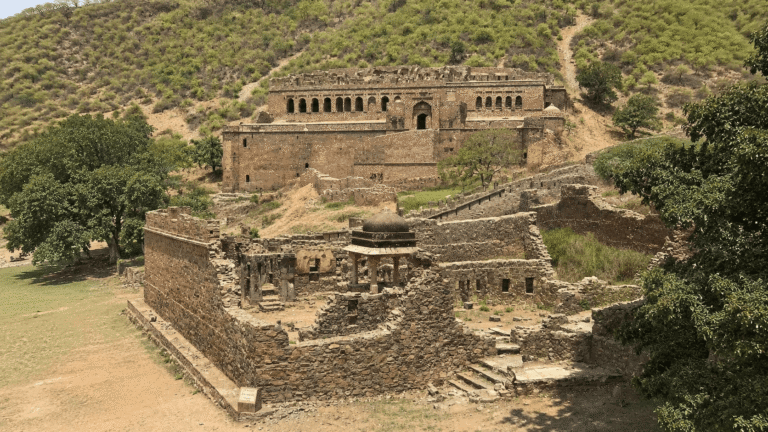
– Structurally uneven and dark after sunset
So there are real reasons for caution:
– Wildlife movement
– Low visibility
– Difficult terrain
But these are not always emphasized in local conversations.
Instead, the warning stays simple.
The Nearby Villages Exist, But Feel Separate
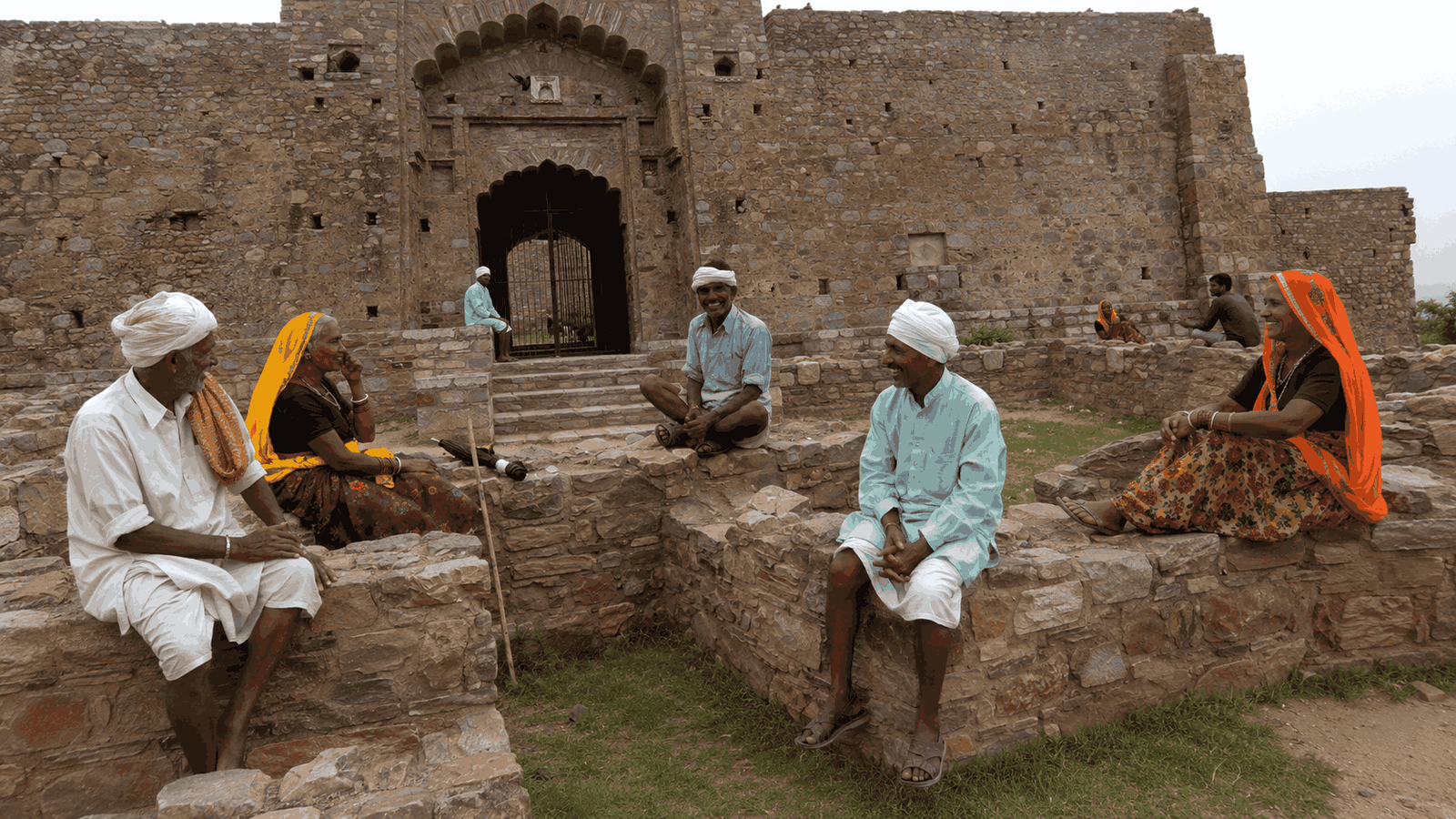
Another interesting detail. People do live near Bhangarh.
Villages exist in the surrounding area.
Life continues normally.
But there is a clear distinction:
– The ruins are treated differently
– The living spaces are separate
So the boundary is not geographical.
It’s psychological.
The fort is “that place.” Not part of everyday life.
Why Locals Don’t Need to Say More
Because the system already works:
– The story exists
– The warning is known
– The restriction is enforced
– Visitors repeat what they’ve heard
There’s no need to add detail. In fact, adding detail might weaken the effect.
Ambiguity keeps the story alive.
What This Actually Tells You
It doesn’t prove anything supernatural.
But it does show how belief is maintained.
Not through dramatic accounts.
Through:
– Consistency
– Simplicity
– And absence of contradiction
That’s enough. In the end, what locals say about Bhangarh tells us less about evidence and more about how belief is maintained.
Final Thought
So what do locals avoid saying about Bhangarh?
Not facts. Not evidence. They avoid specifics.
And that’s what keeps the place in a certain space.
Not fully explained. Not fully dismissed.
Just enough said to guide behavior.
And enough left unsaid to let the story continue.
Read Next:
- Why Is Entry Prohibited After Dark in Bhangarh?
- Bhangarh Curse Explained: Ratnavati, Singhia, and the Legend
- Bhangarh Expectation vs Reality: What People Actually Feel Inside the Fort
For more articles on paranormal phenomena & haunted places, explore the Myth Vs Reality Hub