Why People Ask If Bhangarh Fort Is Safe?
If you’ve heard anything about Bhangarh, it’s probably this: don’t go there after dark.
The stories come quickly after that, curses, warnings, strange feelings, and claims that the place is dangerous. That is enough to make anyone pause before planning a visit.
So the practical question is simple: is Bhangarh Fort safe to visit?
The answer is not as simple as “yes” or “no.”
Bhangarh Fort is visited by tourists during the day, but the fear around it comes from more than one thing, official restrictions, old structures, isolation, local stories, and the way the place feels once you are inside.
So before deciding whether Bhangarh Fort is safe to visit, it helps to separate the practical risks from the legend..
But like any abandoned historical site, it comes with real, non-supernatural risks that you should understand before going.
First, What the Official Rules Say
For official tourism context, Bhangarh Fort is listed by Incredible India as a historic site in Alwar, Rajasthan and managed by the Archaeological Survey of India (ASI).
That means:
– It is a protected heritage site
– It is open to visitors during designated hours
– Entry is restricted after sunset
That last point is what usually triggers concern.
People hear “restricted after sunset” and assume something more dramatic is happening.
But the rule itself is not unusual.
Many historical and archaeological sites in India limit access after dark for safety, preservation, and security reasons. Bhangarh is not an exception in that sense.
So Why Is Entry Restricted at Night?
This is where perception and reality often get mixed.
The restriction exists—but the reason is practical, not paranormal.
At night, Bhangarh becomes:
– Completely unlit
– Harder to navigate
– More isolated
– More exposed to wildlife movement
Combine that with broken structures and uneven terrain, and the risk increases significantly.
That’s enough reason for controlled access. Not a hidden supernatural concern.
Is Bhangarh Really Dangerous?
It depends on what you mean by “dangerous.”
Supernatural danger?
There is no verified evidence that Bhangarh poses any kind of paranormal threat to visitors.
– No confirmed records.
– No documented cases.
– No official acknowledgment of anything beyond folklore.
Physical risk?
Yes, like any abandoned ruin, there are real safety considerations.
That distinction is important.
The danger is practical, not mystical.
The Real Risks at Bhangarh Fort
These are the things you should actually pay attention to:
1. Uneven Terrain and Structural Decay
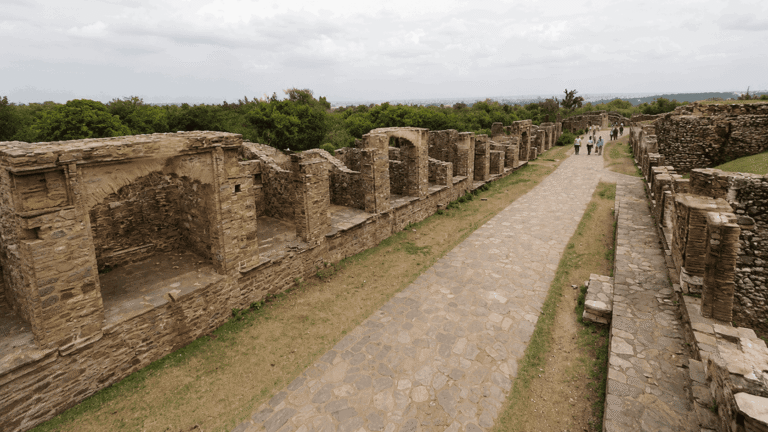
Bhangarh is a historical ruin, not a modern controlled tourist park.
That means:
– Broken pathways
– Loose stones
– Worn-out steps
– Partially damaged structures
Most of it is stable enough for visitors during the day.
But careless movement, especially while distracted can lead to minor injuries.
2. Abandoned Structures
Old structures are not designed for modern foot traffic.
Even if they look solid, they may have:
– Weakened sections
– Unstable surfaces
– Hidden cracks or erosion
Climbing or entering restricted areas is where real risk begins.
Stay within open and commonly used pathways.
3. Wildlife Presence
Bhangarh sits near a semi-forested zone.
Visitors commonly report:
– Monkeys
– Stray animals
– Birds
– Occasional wildlife movement in surrounding areas. This is not unusual for Rajasthan’s heritage locations.
But it’s another reason why daytime visits are safer and more controlled.
4. Isolation
Unlike crowded tourist spots, parts of Bhangarh can feel empty.
That isolation adds to the experience but also means:
– Fewer immediate assistance options
– Longer response time in case of injury
– Reduced supervision in quieter sections
It’s not unsafe, but it requires basic awareness.
5. Heat and Environmental Conditions
Rajasthan’s climate plays a role too.
Depending on when you visit:
– High temperatures
– Dehydration
– Fatigue
– Can become factors, especially if you’re exploring for long periods.
Carry water. Plan your timing.
This is basic but often ignored.
Multiple Legends, One Ruin
This is where things become interesting.
Bhangarh does not have one explanation for its fall.
It has several:
– A cursed love story
– A tantrik’s revenge
– A sage’s warning ignored
These stories don’t fully align. They overlap, contradict, and evolve.
Which raises a different question: Why does one place need multiple legends to explain it?
Because the real history is not clean and when history leaves gaps, stories compete to fill them.
Why People Think Bhangarh Is Dangerous
Because of the stories.
Once a place develops a reputation, everything about it gets interpreted through that lens.
– Silence becomes tension.
– Isolation becomes threat.
– Restrictions become warnings.
So when people ask: “Why is Bhangarh Fort dangerous?” What they’re often responding to is not actual risk,but perceived risk shaped by folklore.
Can Tourists Visit Bhangarh Safely?
Yes.
Thousands of people visit Bhangarh Fort safely every year.
During the day, with normal caution, it is a manageable and accessible historical site.
Most visits are uneventful in the practical sense.
The “experience” people talk about is usually emotional, not physical.
Simple Safety Guidelines (What Actually Matters)
If you’re planning to visit, follow these:
– Visit during daylight hours
– Stick to visible and open pathways
– Avoid climbing unstable structures
Be cautious around wildlife (especially monkeys)
– Carry water and wear suitable footwear
– Avoid wandering into isolated areas alone
That’s enough. No special ritual required.
The Role of Fear in the Experience
Even if you know all of this, Bhangarh can still feel intense.
That’s normal.
The combination of:
– Ruins
– Silence
– History
– Storytelling
creates a strong psychological effect. You might feel uneasy.
That doesn’t mean you’re in danger. It means the place is working on your perception.
Final Thought
So, is Bhangarh Fort safe to visit if you follow the rules? During the permitted daytime hours, the concern is less about supernatural danger and more about practical caution, old structures, uneven ground, heat, isolation, and basic visitor awareness, so yes, during the day, with basic awareness, it is safe for tourists.
There is no verified supernatural danger associated with the site.
But like any abandoned historical ruin, it carries real, physical risks tied to terrain, structure, environment, and isolation. Understand those, respect the space, and the visit becomes what it’s meant to be: An atmospheric, unusual, and memorable place, not a dangerous one.
Read Next:
- Why Is Entry Prohibited After Dark in Bhangarh?
- Is Bhangarh Near a Forest? The Real Surroundings of the Fort
- Animals in Bhangarh Fort: Wildlife Around the Ruins
For more articles on Bhangarh, haunted places, and Indian supernatural legends, explore the Journal