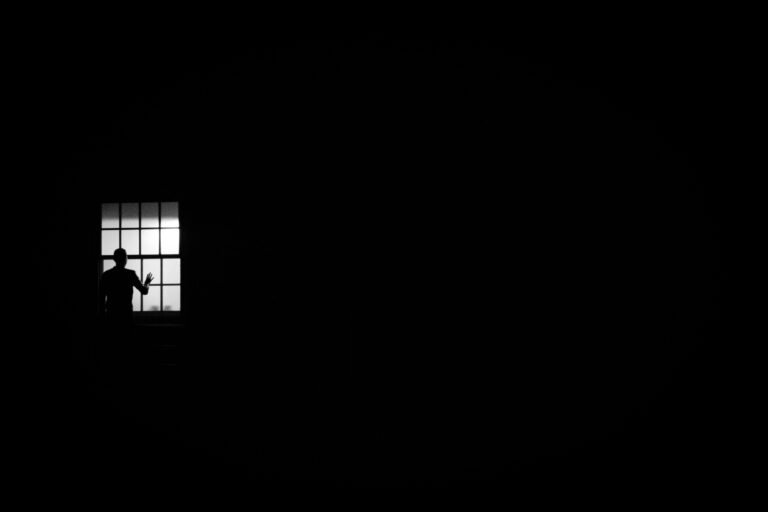

Have you ever thought?
The psychology of haunted places begins before anything strange happens.
You do not walk into an eerie location empty.
You walk in with a story.
A warning. A legend. A clip.
A line from someone who went before you.
And without realizing it, your brain has already started building the experience.
Before you see anything. Before anything happens.
That is why haunted places often feel strange even when nothing visible has occurred.
The Brain Doesn’t Just See. It Predicts.
Most people assume perception works like this:
– You see → then you interpret
But in reality, it often works the other way around:
– You expect → then you see
This is called top-down processing.
Your brain builds an internal “map” of what a place should be like based on:
– Stories
– Beliefs
– Prior knowledge
– Cultural context
So when you enter a place already labeled as haunted, your brain isn’t starting fresh.
It already has a framework: “This place is haunted.”
And everything you experience gets filtered through that.
When the Environment Doesn’t Match, the Brain Reacts
Now add something else.
Many abandoned or haunted locations do not behave like normal environments:
– Structures feel incomplete
– Sound behaves differently
– Movement is unpredictable
l- Lghting is uneven
This creates what’s known as a prediction error.
The brain expects one thing. The environment delivers another.
That mismatch triggers:
– Heightened alertness
– Increased sensitivity
– Physical arousal
And the brain labels that state.
Often as: fear or presence
Even though it started as confusion.
You Start Looking for Proof Without Realizing It
Once the expectation is set, something subtle happens.
You begin scanning the environment.
Not randomly—but selectively.
This is confirmation bias.
You notice:
– The one shadow that looks human
– The one sound that doesn’t fit
– The one moment that feels different
And ignore:
– Everything that looks normal
– Everything that has an easy explanation
So the experience starts reinforcing itself.
Not because the environment changed.
Because your attention did.
Suggestion Changes What People Report
There’s a reason why people have stronger “experiences” in places labeled as haunted.
Because they were told to expect one.
This is the suggestion effect.
If someone enters a space believing it is ordinary, they notice less.
If they are told: “This place is haunted”
They report:
– More anxiety
– More unusual sensations
– More “unexplained” moments
Even if the physical environment is the same. Expectation doesn’t just influence interpretation.
It changes experience.
The Brain Is Wired to Assume Threat
Now layer in something deeper.
Human perception evolved for survival.
That means one key bias: It is safer to assume something is there than to miss a real threat
This is part of evolutionary psychology.
In low-information environments, the brain prefers:
false positives over false negatives
So:
– A shadow becomes a figure
– A sound becomes movement
– An empty space feels occupied
In a normal place, this gets corrected quickly., In a place like Bhangarh, it doesn’t.
Because the environment supports the illusion.
Ambiguity Is the Perfect Trigger
Many haunted locations have the right conditions:
– Low light
– Silence
– Incomplete structures
– Visual irregularity
– Isolation
This creates environmental ambiguity.
Which means: the brain doesn’t get clear signals
So it fills the gaps.
And when it fills those gaps, it doesn’t choose random explanations.
It chooses the ones already available.
In this case:
– Folklore
– Stories
– The idea of a curse
Why Bhangarh Feels Haunted Before Anything Happens
This is where everything comes together.
By the time you reach Bhangarh:
– You’ve heard the legend
– You’ve seen the warning signs
– You know about the restriction after sunset
So your brain is already primed.
The experience doesn’t start inside the fort. It starts before you enter it.
Which is why many people report: “I felt something almost immediately.”
They didn’t. They felt the expectation taking hold.
The Experience Is Real. The Cause Is Different.
This is important. The feeling is not fake.
People genuinely experience:
– Unease
– Alertness
– Presence
visual misinterpretation
But those experiences are built from:
– Expectation
– Environment
– Perception
Not from something external interacting with them.
Why the Haunted Explanation Feels Stronger
Because it completes the story.
Saying: “Your brain is predicting, scanning, and filling gaps” is accurate.
But saying: “Something is here” is simpler. More direct.
More emotionally satisfying.
So the brain accepts it faster.
Final Thought
So how does expectation affect perception in haunted places?
It doesn’t just influence what you think.
It shapes what you actually experience.
Your brain builds a model of the place before you arrive.
It scans for confirmation once you’re inside.
It fills gaps when information is missing.
And in environments like Bhangarh where silence, structure, and story all align that process becomes powerful enough to feel like something real is happening.
Even when nothing is.
Read Next:
- Why Every Region Has a Haunted Place
- Why Empty Places Feel Haunted: The Psychology Behind Bhangarh’s Eerie Atmosphere
- Why We See Things in the Dark: The Brain Science Behind Shadows and Figures
For more articles on Bhangarh, haunted places, and Indian supernatural legends, explore the Myth Vs Reality Hub