The Legend Behind Bhangarh’s Most Famous Story
Ask ten people what they know about Bhangarh Fort, and most will mention the same name
before anything else: Ratnavati. The Rani Ratnavati Bhangarh legend is the story that gives the haunted fort its most human face.
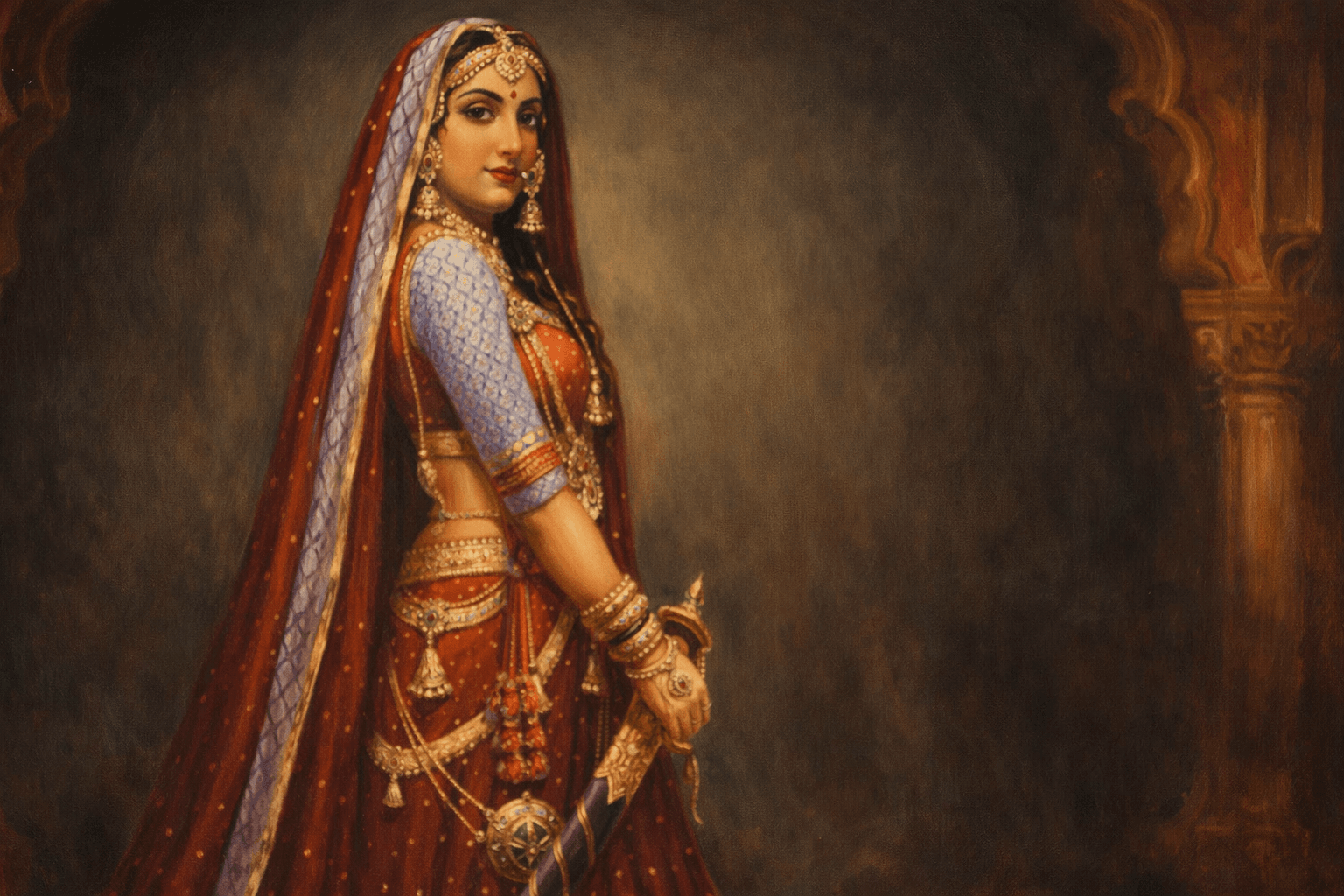
For many, she is the emotional center of the entire myth. The princess whose beauty supposedly drew obsession, black magic, revenge, and ultimately the destruction of a city.
Without her, Bhangarh is just an abandoned fort with a haunted reputation.
With her, it becomes tragedy.
That is why the Bhangarh Fort Ratnavati story has survived so strongly. It gives the ruins a face. A victim. A narrative people can hold onto.
But an important distinction comes first:
The story of Princess Ratnavati is part of Bhangarh’s folklore. It is widely repeated, deeply associated with the site, and central to its mythology—but it is not firmly established as verified historical fact.
That matters.
Because understanding Ratnavati means understanding not just the story itself, but why this particular legend became inseparable from Bhangarh in the first place. The story of Rani Ratnavati Bhangarh survives because it sits at the centre of the fort’s most repeated legend a tale of beauty, obsession, power, and curse.
The Core Legend of Princess Ratnavati
The most widely told version of the story goes like this:
Princess Ratnavati was the beautiful daughter of Bhangarh’s ruling family, famed for her intelligence and extraordinary beauty. Her reputation spread far beyond the kingdom.
Among those said to have become obsessed with her was a local tantrik—often identified in later retellings as Singhia.
Unable to win her affection, he turned to black magic.
According to the legend, the tantrik enchanted a bottle of oil, perfume, or cosmetic item intended for Ratnavati, hoping that once she touched it, she would fall under his control and come to him.
Ratnavati, however, sensed something was wrong.
In some versions she learned of the scheme through servants. In others she perceived the enchantment herself.
Instead of using the item, she threw it onto a large stone or boulder.
The spell reversed.
The enchanted object caused the stone to roll toward the tantrik, crushing him.
As he lay dying, the tantrik cursed Bhangarh:
That the city would soon be destroyed.
That no one would live there in peace.
That ruin would follow.
Soon after, according to the story, Bhangarh fell.
And its destruction became tied forever to Ratnavati’s name.
How Did Ratnavati Die?
This is where the legend becomes less consistent.
People wonder how did Ratnavati Die and expect expect one fixed answer. There isn’t one.
Different versions of the folklore describe her fate differently:
– Version 1: She Dies During the Fall of Bhangarh: Some tellings say Ratnavati died when enemy forces attacked the kingdom shortly after the curse.
– Version 2: She Commits Ritual Death : Other versions suggest she chose death rather than face capture or dishonor after the kingdom’s collapse.
– Version 3: Her Fate Is Left Unclear: In some retellings, the focus remains entirely on the curse and destruction, leaving her ultimate death ambiguous.
That inconsistency is worth noting. Folklore often shifts in details over time, especially when transmitted orally rather than through fixed documentation.
Is Princess Ratnavati Historically Verified?
This is where the line between legend and history becomes important.
Despite how confidently the story is repeated today, there is no strong historical evidence conclusively verifying Princess Ratnavati as a documented historical figure in the way the legend presents her.
That does not prove she never existed.
It means:
– The folklore surrounding her is not firmly established by historical records
– The curse narrative attached to her is not verified historical documentation
modern retellings often present the story with more certainty than the evidence supports
In practical terms: Ratnavati should be understood as part of Bhangarh’s mythological tradition, not as a confirmed historical account. That distinction is often lost online.
Why This Story Became the Dominant Bhangarh Legend
Because it contains everything people remember.
Think about its structure:
– A beautiful princess
– Forbidden obsession
– Dark magic
– A clever reversal
– A dying curse
– A ruined kingdom
It is almost perfectly built for survival.
Many abandoned places have ghost stories.Very few have a tragedy this narratively complete.
The Ratnavati legend does something more than explain Bhangarh’s downfall. It gives emotional shape to it.
It turns a ruined settlement into a cautionary tale. That makes the myth more powerful.
The Role of the Tantrik in Her Story
Ratnavati’s legend cannot be separated from the tantrik who curses Bhangarh.
In most modern versions, he functions as:
– The villain of the myth
– The supernatural catalyst
– The source of the curse
– The explanation for Bhangarh’s destruction
Without him, Ratnavati’s story is tragedy.
With him, it becomes supernatural folklore.
This pairing is why the Ratnavati legend and the tantrik legend are often told as one continuous narrative rather than separate stories.
Together, they form the backbone of the entire Bhangarh curse mythology.
Why People Believe the Story So Easily
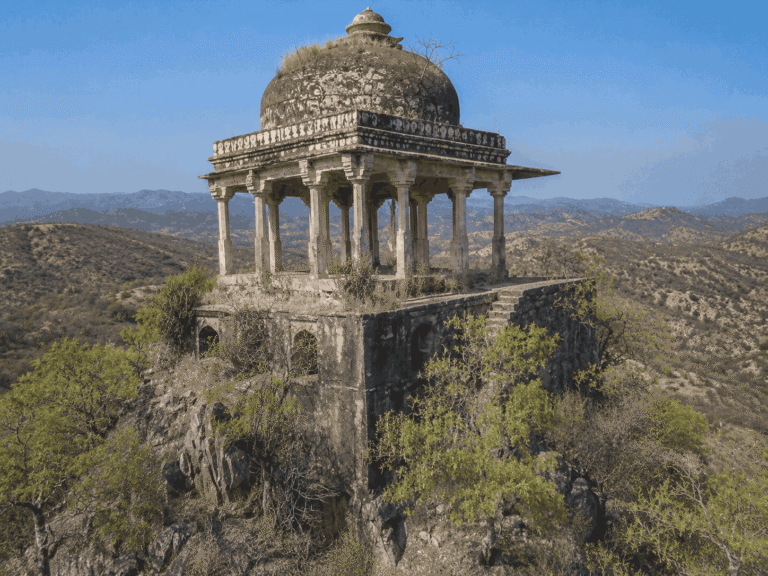
Partly because the ruins support it visually.
Bhangarh already looks like the aftermath of something dramatic.
Its abandoned palaces, temples, markets, and broken royal structures make the place feel like it should have a singular tragic explanation.
A gradual decline caused by political and environmental factors may be historically plausible.
But it does not emotionally satisfy the way a cursed princess story does.
So when visitors stand in those ruins, the Ratnavati legend often feels more believable than the historical ambiguity.
Not because it is better evidenced. Because it better fits the atmosphere.
Folklore Does Not Need Proof to Matter
Whether Ratnavati existed exactly as described is, in some ways, secondary to the role her legend now plays.
Because folklore is not only about factual accuracy.
It is also about:
– How communities explain places
– How memory attaches itself to ruins
– How stories survive when records fade
– How emotion shapes public history
Ratnavati’s story may not be historically verified in full. But culturally, it has become real in another sense:
It is now inseparable from how Bhangarh is understood.
Remove Ratnavati from the myth, and much of Bhangarh’s identity disappears with her.
Final Thought
So who was Ratnavati?
Historically, the answer is uncertain.
Folklorically, she is the tragic princess at the center of Bhangarh’s most famous legend—the figure through whom the fort’s haunted reputation became personal, emotional, and memorable.
Her story may not be verified history.
But that has never stopped it from shaping the way people see the ruins.
Because Bhangarh is not famous simply for being abandoned.
It is famous because people believe something happened there that deserved a legend.
Ratnavati gave that belief a face. And once a place gets a story that strong, facts alone rarely replace it.
Whether treated as folklore, memory, or symbolic storytelling, the Rani Ratnavati Bhangarh legend remains one of the strongest reasons people still connect the fort with mystery and fear.
Read Next:
- Bhangarh Curse Explained: Ratnavati, Singhia, and the Legend
- Tantrik of Bhangarh: The Story of Singhia and the Curse
- Real Story of Bhangarh Fort: Beyond the Legends
To know how this legend inspires our cinematic interpretation on the Bhangarh Story visit our Film Page.