The origin
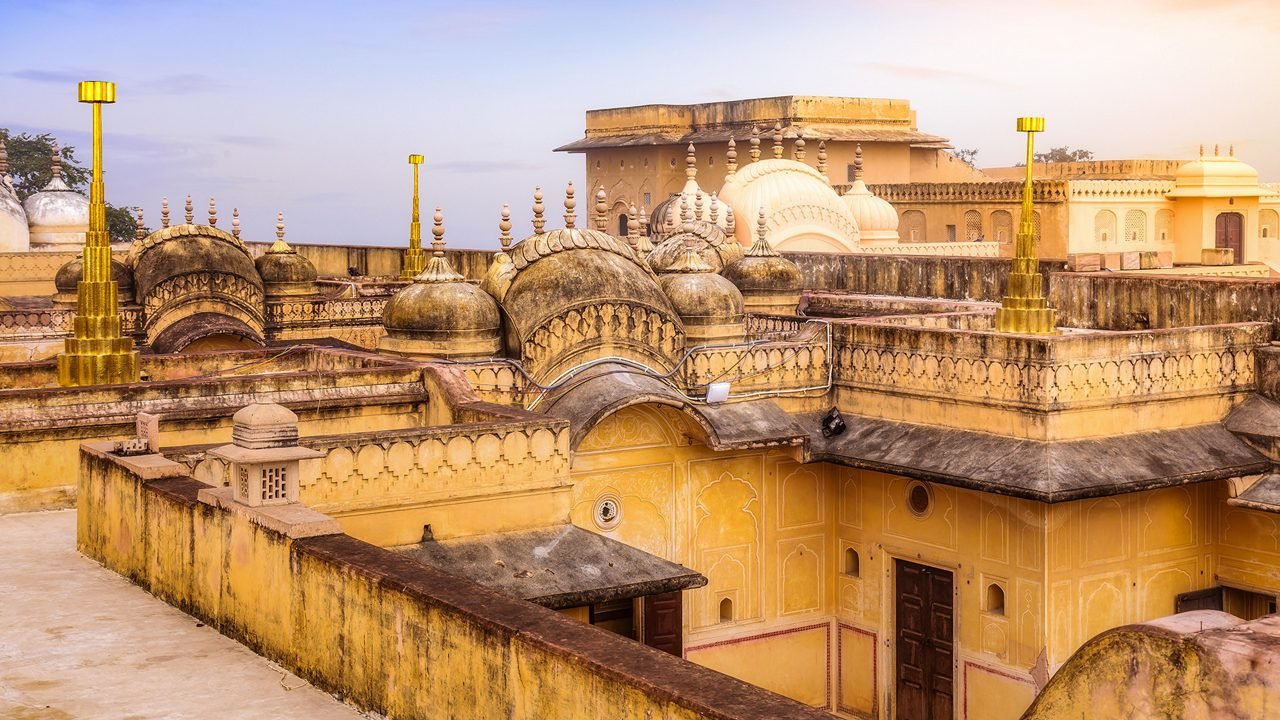
Perched above Jaipur, looking out over the entire city, Nahargarh Fort doesn’t feel like a place meant to hide anything.
It’s open. Elevated. Visible from miles away.
By day, it’s one of the most visited viewpoints in the city. By evening, it becomes a place people come to watch the lights of Jaipur turn on.
And yet, behind that openness, there’s a story that never quite leaves the place.
Not one story.
Several.
And like most places that carry a haunted reputation, it didn’t start that way.
A Fort Built With Purpose
Nahargarh Fort was built in 1734 by Sawai Jai Singh II, the same ruler who founded Jaipur.
Its purpose was practical:
defense
surveillance
protection of the city
Located along the Aravalli Hills, it forms part of Jaipur’s defensive ring along with Amber and Jaigarh forts.
There is nothing unusual in its origin.
No sudden abandonment.
No unexplained collapse.
Which makes what came later more interesting.
The First Story: Nahar Singh Bhomia
The central legend tied to Nahargarh doesn’t begin with ghosts.
It begins with resistance.
According to local belief, during the construction of the fort, something kept going wrong.
structures would not hold
progress would stall
work done during the day would reportedly be undone by morning
The explanation given was not structural.
It was spiritual.
The land, it was said, belonged to a Rathore prince named Nahar Singh Bhomia.
And his spirit was not willing to give it up.
The Resolution: A Temple, Not a Battle
Unlike most conflict-based legends, this one doesn’t end in confrontation.
It ends in accommodation.
To resolve the disturbances, a temple was built for Nahar Singh Bhomia within the fort complex.
Once that was done, the story says, the obstruction stopped.
Construction continued.
And the fort was named Nahargarh—often interpreted as “Abode of Tigers,” but also connected to the name Nahar itself.
What This Legend Actually Represents
There’s no historical record confirming that construction was physically disrupted by unexplained forces.
But the story serves a purpose.
It reflects a common pattern:
When a large structure is built on existing land, especially in regions with older associations, stories emerge to explain tension between:
old ownership
new authority
Instead of conflict, the legend resolves it symbolically:
The land is acknowledged.
The spirit is respected.
Construction is allowed.
It’s not about haunting.
It’s about legitimacy.
How the Story Expanded Over Time
The Nahar Singh legend is the core.
But it didn’t stay alone.
Over time, additional stories attached themselves to the fort.
Not necessarily connected.
But similar in tone.
The “Guarding Presence”
Some visitors and locals describe the fort as having a presence.
Not aggressive.
But watchful.
Reports include:
sudden gusts of cold wind
movement in peripheral vision
shadows behaving unpredictably
These are not consistent sightings.
They don’t point to a specific figure.
They are generalized experiences, often attributed back to Nahar Singh.
The Maharaja’s Presence
Another layer of folklore suggests that the spirit of Sawai Jai Singh II himself remains within the fort.
The reasoning is not fear-based.
It’s attachment.
The idea that:
the ruler favored this location
spent time here
built it as a retreat
And therefore never fully “left.”
There is no historical evidence supporting this.
But it fits the pattern of royal sites acquiring posthumous narratives.
The Story of Ras Kapoor
A more dramatic addition to Nahargarh’s folklore involves a figure named Ras Kapoor.
Often described as:
a dancer
someone imprisoned within the fort
someone who died under tragic circumstances
This story appears in fragments.
There is no consistent version.
No verified record confirming her existence or her connection to the fort.
But the narrative persists.
Because it adds a familiar element:
A personal tragedy inside a large structure.
Which is often how haunted stories expand.
The Modern “Mysterious Death” Claim
More recent discussions sometimes reference an incident involving a renovation engineer who was found dead under unclear circumstances.
This is often used to reinforce the fort’s haunted reputation.
But it needs to be handled carefully.
There is:
no confirmed paranormal link
no verified connection to any legend
no consistent documentation tying the event to the folklore
Incidents like this tend to get absorbed into existing narratives.
Not because they prove anything.
But because they fit the tone.
What Nahargarh Feels Like Today
Visit Nahargarh during the day, and it feels like a functioning historical site.
open walkways
clear viewpoints
steady tourist movement
There’s no immediate sense of unease.
At night, the experience changes—but not dramatically.
wind increases along the hill
sound carries differently
the city below becomes distant
But the fort itself does not become inaccessible.
There are no restrictions like those at Bhangarh.
People visit. Sit. Stay.
Why the Fort Feels Different at Night
The environment plays a role.
Being on a hilltop means:
exposure to wind
shifting temperature
reduced visual reference points
This can create:
sudden cold sensations
shadow movement
heightened awareness
These are environmental effects.
But when combined with existing stories, they are often interpreted differently.
A Fort With Multiple Stories, Not One Truth
What makes Nahargarh distinct is not the strength of a single legend.
It’s the layering of many.
a land spirit resisting construction
a ruler who never left
a dancer’s tragedy
modern incidents
These stories don’t form one consistent narrative.
They exist side by side.
And over time, they blend.
Final Thought
So is Nahargarh Fort haunted?
There are stories.
There are reported experiences.
There is a historical structure that has been continuously used, not abandoned.
What exists here is not a single, defined haunting.
It’s a collection of interpretations built over time.
The original legend explains the name.
The later stories explain the feeling.
And the place itself—open, elevated, constantly visited—never fully confirms either.
Read Next:
- Why Every Region Has a Haunted Place
- The Kuldhara Village Curse: Legend, History, and What Remains Today
- Brij Raj Bhawan Palace: The “Haunted” Heritage Hotel in Kota
- Why Bhangarh Feels Haunted (Reality Explained)
- How Expectation Shapes What You Experience in “Haunted” Places
Or explore the full story behind Bhangarh on the main hub page.