Every Region Has Its Haunted Place
Why every region has a haunted place is not just a ghost-story question.
Every place has one.
A fort people avoid after dark.A house no one wants to stay in.
A stretch of land that carries a warning before you even get there. Every place has one.
Almost every region has a haunted place people talk about, avoid, or test themselves against.
In Rajasthan, it’s Bhangarh. Not far away, it’s Kuldhara.
In other parts of the world, the names change but the pattern doesn’t.
That’s the part worth paying attention to.
Because if every region has a “haunted place,” the question isn’t whether they’re real.
The question is: Why does every place create one?
It Usually Starts With Something That Happened
Most so-called haunted locations aren’t random.
They’re tied to something.
Not always clearly documented. Not always dramatic. But something that marks the place as different.
It could be:
– Abandonment
– Conflict
– Sudden decline
– Stories of loss or displacement
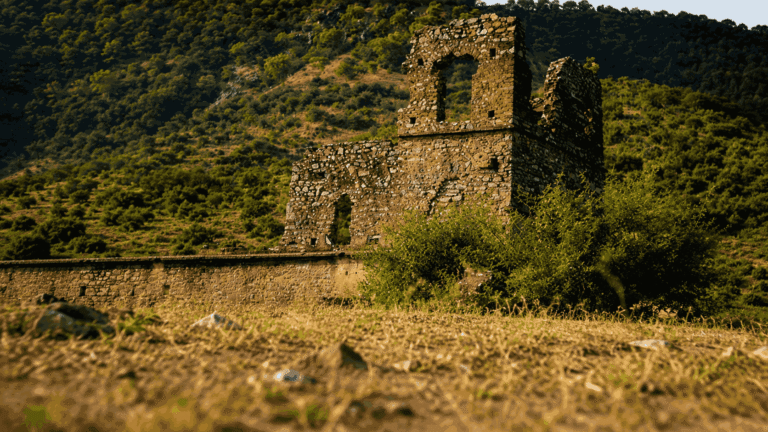
Take Bhangarh. Its history involves a real settlement, a period of decline, and eventual abandonment.
That alone is enough to create a narrative gap. And wherever there’s a gap, people tend to fill it.
Stories Don’t Stay Static — They Grow
Once a place is associated with an event or even just a feeling stories begin to form around it.
And they don’t stay the same. They evolve.
One version becomes two. Two become ten.
Over time, repetition turns possibility into certainty. This is how folklore builds.
In Bhangarh’s case, stories about a curse, a tantrik, and a princess get retold across generations. The details shift, but the core idea stays: Something happened here.
That idea is enough.
Because once a story exists, it doesn’t need proof to survive. It needs repetition.
The Brain Is Already Wired for This
Now add something deeper. Human perception isn’t neutral.
This is one reason why every region has a haunted place: the human brain reacts strongly to uncertainty, silence, and incomplete information.
We are built to detect patterns especially threats.
In uncertain environments:
– The brain assumes presence
– Fills gaps in information
– Prefers false alarms over missed danger
So when someone enters:
– An empty structure
– A dark corridor
A silent settlement …the brain doesn’t wait for full clarity.
It starts interpreting. That’s why ordinary things like:
– Wind
– Shadows
– Distant sounds
can feel like something more.
Not because they are. Because the brain completes the pattern.
Abandoned Places Do Half the Work Already
There’s a reason haunted stories attach themselves to ruins more than functioning buildings.
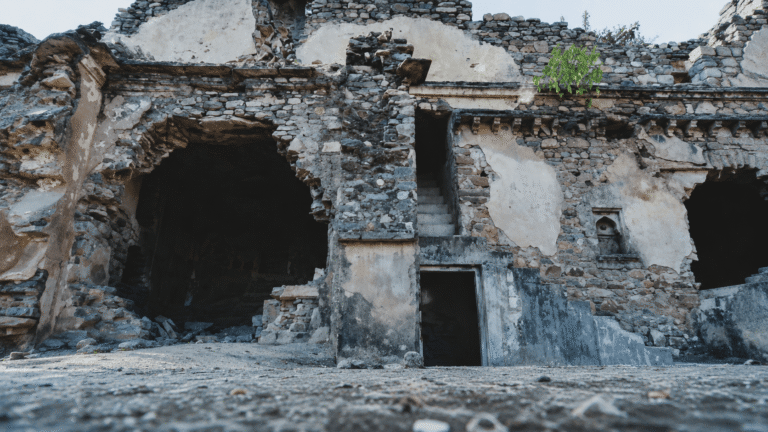
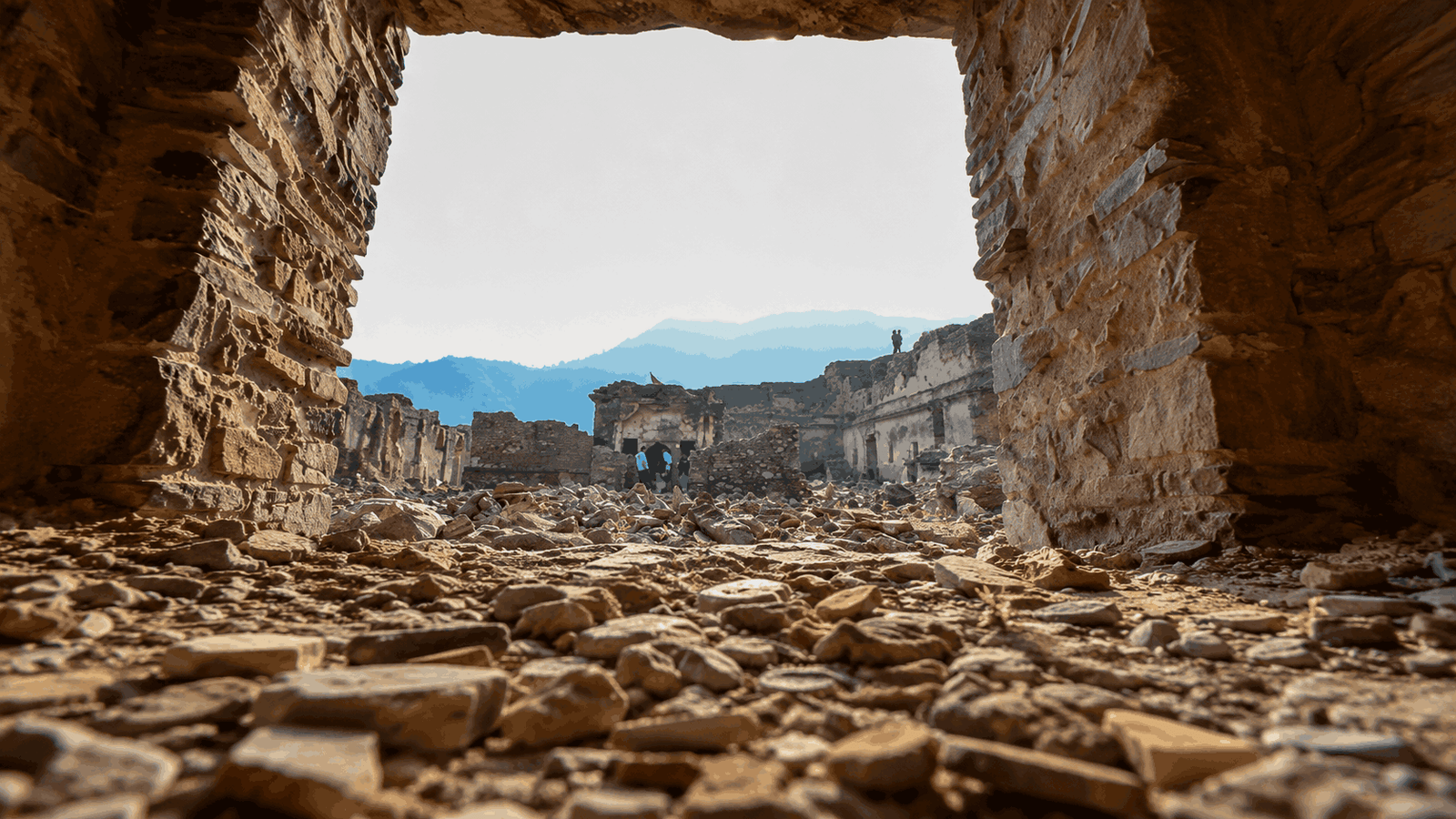
Abandoned places look incomplete.
broken walls, missing roofs, overgrown vegetation & silence where there should be activity
This creates a mismatch.
The structure suggests life. The reality delivers absence. That gap creates discomfort.
And discomfort looks for explanation.
Culture Decides What That Explanation Looks Like
The feeling may be universal. But the explanation is not.
Different cultures interpret the same experience differently.
In some places, it becomes ghosts, in others, spirits or ancestors, In others, jinn or curses
The underlying mechanism is the same:
– Something feels off
– The culture provides a label
So Bhangarh becomes a cursed city. Elsewhere, the same pattern becomes something else.
Suggestion Shapes the Experience Before It Begins
By the time someone reaches a place like Bhangarh, they already know what they’re supposed to feel.
They’ve heard:
-It’s haunted
– People avoid it
– Something happens after dark
That expectation matters. Because the brain doesn’t just react, it predicts.
And once it predicts, it starts looking for confirmation.
So:
– A quiet space feels unusually silent
– A shadow feels intentional
– A sound feels directed
The environment hasn’t changed. The interpretation has.
The Role of Fear and Curiosity
There’s another factor people don’t always admit.
We are drawn to fear, when it’s controlled.
Haunted places offer:
– Danger without immediate risk
– Mystery without consequence
– Intensity without explanation
That makes them attractive. People want to go.
They want to feel something. And that desire keeps the stories alive.
Why Some Places Become “The” Haunted Place
Not every abandoned structure becomes famous.
But most regions settle on one.
Usually, it’s the place that combines:
– Scale (large enough to feel significant)
– Visibility (accessible enough to visit)
– A strong narrative (curse, tragedy, mystery)
– A distinct atmosphere (isolation, silence, structure)
Bhangarh fits all of these. That’s why it stands out.
Not because it’s the only place with a story. But because it’s the one where everything aligns.
Bhangarh Is Not Unique — It’s a Perfect Example
What makes Bhangarh interesting isn’t that it’s different.
It’s that it’s typical, just at a larger scale.
It has:
– Real historical context
– A period of abandonment
– Strong folklore
– Environmental conditions that amplify perception
– Official entry restrictions that make the place feel more serious in public memory
Put all of that together, and you get a place that feels definitive.
Like the haunted location. Even though the same pattern exists elsewhere.
So Why Does Every Region Have One?
Because the ingredients repeat.
Every region has:
– Places with history or abandonment
– Cultural storytelling traditions
– Environments that trigger perception
– People looking for meaning
When those elements overlap, a haunted location emerges.
Not randomly. Predictably.
Final Thought
Haunted places aren’t isolated mysteries.
They are patterns.
They form where:
– History leaves gaps
– Environments create unease
Stories fill the silence and perception turns ambiguity into meaning
That’s why every region has one.
Not because something is happening there.
But because humans, everywhere, respond to certain places in the same way.
And once that response becomes a story, it rarely disappears.
Read Next:
- The Psychology of Haunted Places: Why Expectation Changes What You Feel
- The Kuldhara Village Curse: Legend, History, and What Remains Today
- Kiradu Temple Curse: Why People Say You Can’t Stay After Sunset
For more articles on Bhangarh, haunted places, and Indian supernatural legends, explore the Myth Vs Reality Hub