Is It Really Psychology?
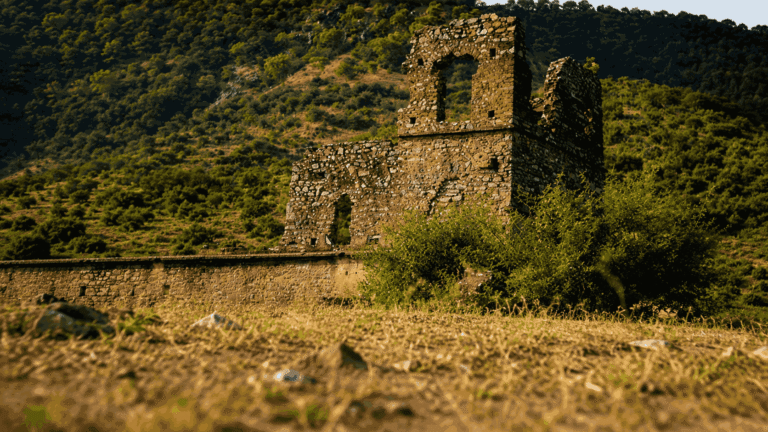
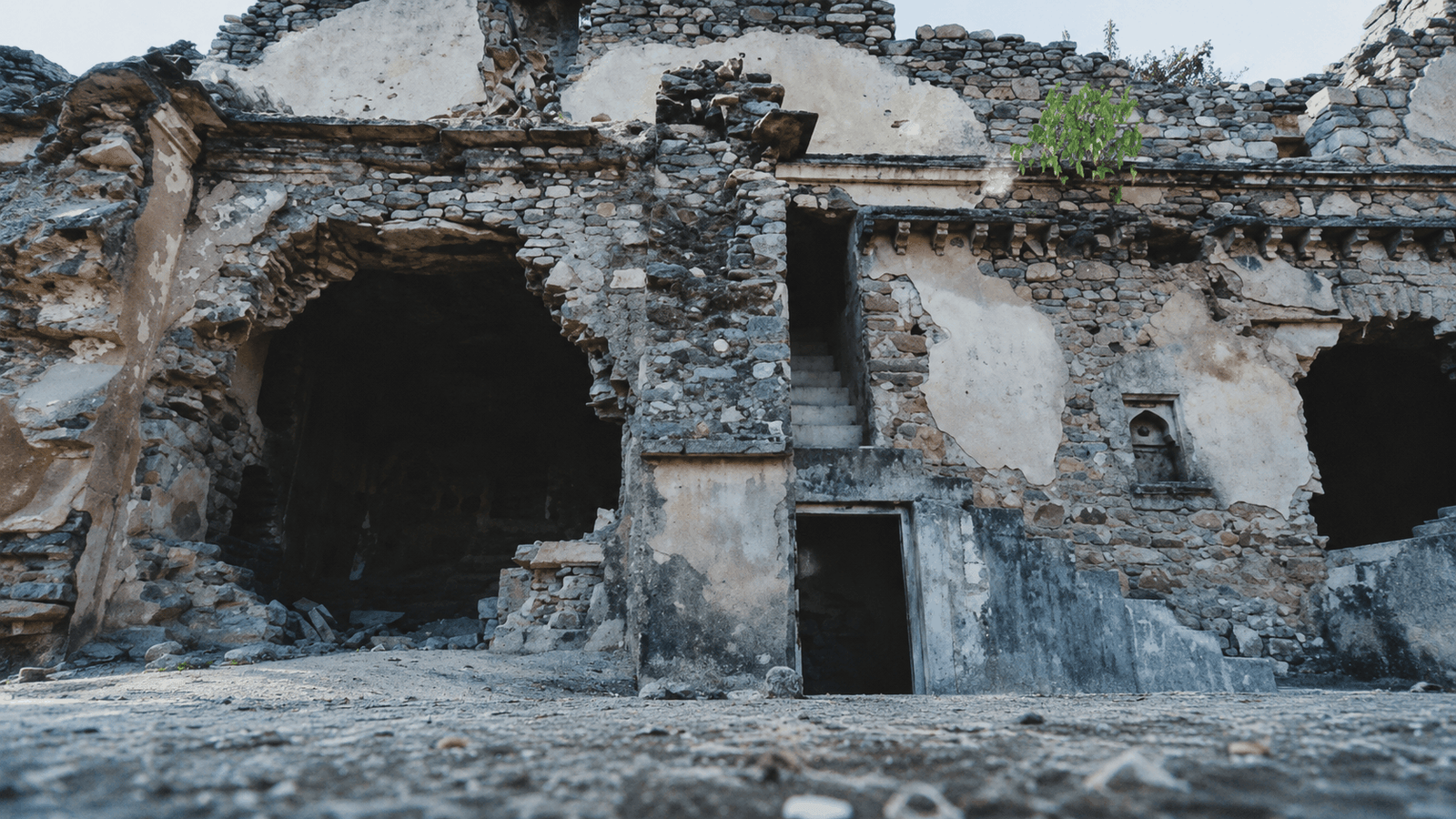
Empty ruins feel haunted because the human brain does not read silence as neutral. At Bhangarh, broken structures, abandoned spaces, and the absence of normal human activity create unease before any ghost story begins.
People don’t need a ghost to feel something at Bhangarh.
They feel it anyway.
A pause in conversation. A glance over the shoulder.
That low-level discomfort you can’t explain clearly.
And the instinctive conclusion is simple: Something is here.
But what if that feeling has nothing to do with anything supernatural?
What if it’s something far more predictable, something built into how the human brain works?
That’s where the real explanation of the Bhangarh fort mystery begins.
The Feeling Has a Name: Kenopsia
Here’s a word for what people experience in places like Bhangarh.
Kenopsia.
It describes the eerie atmosphere of a place that is usually full of life—but is now empty and silent.
Think of:
– An empty marketplace
– A silent palace
– A town with no movement
Bhangarh fits this perfectly. This is one reason empty ruins feel haunted even before anyone mentions a curse, ghost, or local legend. You’re not just looking at ruins.
You’re looking at a place that clearly used to function and now doesn’t.
That gap creates unease.
The “Uncanny Valley” for Buildings
Most people know the uncanny valley in terms of faces—robots that look almost human but not quite.
The same effect happens with spaces.
Your brain has expectations:
– A house should have a roof
– A shop should have doors
– A city should have people
Bhangarh violates all of them.
You see:
– Roofless homes
– Open stone shops
– Complete silence
That creates cognitive dissonance—your brain can’t match what it sees with what it expects.
So it labels the space as: “wrong” Not haunted.
Just wrong.
The Brain Switches Into Survival Mode
In a normal environment, your brain relaxes.
At Bhangarh, it doesn’t.
Instead, it shifts into something called hyper-vigilance.
This is a heightened state of awareness where your brain is constantly scanning for threats.
Why?
Because the environment is ambiguous.
You don’t know what’s around you. You don’t hear normal human activity
You can’t predict what comes next
So the brain prepares for danger, even if none exists.
We Are Wired to Assume “Something Is There”
Humans evolved with a bias.
It’s safer to assume something is present even if it isn’t than to miss a real threat.
This is called hyperactive agent detection.
In simple terms:
– If something moves, your brain assumes intention
– If something makes a sound, your brain assumes presence
At Bhangarh:
– A rustling leaf
– A distant sound
– A shifting shadow
It can easily be interpreted as:
– Someone watching
– Something moving
– Something following
Not because it’s real. Because your brain prefers a false positive over a missed danger.
The Silence Is Not Neutral
Silence in cities feels peaceful.
Silence in abandoned places feels different.
At Bhangarh:
– No traffic
– No voices
– No background noise
Your brain notices the absence.
And it doesn’t interpret it as calm.
It interprets it as: something is missing, something is wrong.
That is why empty ruins feel haunted in a different way from quiet temples, parks, or old buildings.
That is why empty ruins feel haunted differently from quiet parks, temples, or ordinary old buildings.
Because in human environments, silence is rarely normal.
The Narrative Vacuum
Your brain doesn’t like gaps.
When it sees:
– A marketplace with no people
– A palace with no royalty
– A temple without activity
It tries to complete the story.
This is called a narrative vacuum.
And when the brain fills that gap, it doesn’t choose neutral explanations.
It leans toward:
-Danger
– Loss
– Mystery
That’s how the bhangarh haunted mystery builds itself, internally.
Ruins Trigger Something Deeper
There’s another layer most people don’t notice consciously.
Ruins remind us of something uncomfortable:
– Decay.
– Time.
– Endings.
This is known as mortality salience a subconscious awareness of impermanence.
When you stand in Bhangarh:
– You see structures that didn’t survive
– You see systems that stopped
– You see time winning
That creates a subtle, underlying anxiety. Not fear of ghosts.
Something more abstract.
Environmental Triggers Make It Stronger
Now add physical conditions to the mix.
Isolation. Bhangarh is not surrounded by urban activity.
That creates:
– Distance from help
– Reduced safety cues
– Heightened vulnerability
Terrain and Visibility
– Uneven ground
– Obstructed sightlines
– Open and enclosed spaces alternating
This keeps your brain alert.
Infrasound (Low-Frequency Vibrations)
Certain environments—especially windy, rocky areas—can produce low-frequency sound waves below human hearing.
These can cause:
– Unease
– Discomfort
– A feeling of being watched
Even when you don’t consciously hear anything.
The Final Layer: The Story You Bring With You
By the time most people reach Bhangarh, they already know:
i- It’s considered haunted
– It’s has a curse
– Entry is restricted after sunset
So the brain is already primed. Every sensation gets filtered through that expectation.
A sound is not just a sound. It becomes evidence.
Why There Is No Paranormal Proof
Despite decades of interest, there is no verified, widely accepted evidence of supernatural activity at Bhangarh.
What has been consistently observed is:
– Strong emotional response
– Heightened perception
– Environmental discomfort
That doesn’t mean people are wrong about what they feel.
It means the cause is different.
Why the Experience Still Feels Real
Because it is real.
The fear. The discomfort.
The sense of presence. All of it is genuine.
But it’s generated internally triggered by:
– Environment
– Structure
– Silence
– Expectation
Not by something external.
Final Thought
So why do empty ruins feel haunted, especially in a place like Bhangarh?
Because they are almost but not quite what your brain expects.
Because they remove normal cues of safety.
Because they activate survival instincts designed for uncertainty.
And because when the environment doesn’t explain itself clearly, your mind does it for you.
Not with facts. With stories.
And in a place like Bhangarh, those stories tend to lean in one direction.
Even when nothing is actually there.
Read Next:
- The Psychology of Haunted Places: Why Expectation Changes What You Feel
- Why Every Region Has a Haunted Place
- Bhangarh Expectation vs Reality: What People Actually Feel Inside the Fort
For more articles on Bhangarh, haunted places, and Indian supernatural legends, explore the Myth Vs Reality Hub