The Sound of Silence
There’s a particular kind of silence at Bhangarh that bothers people.
Not ordinary quiet. Not the peaceful kind.
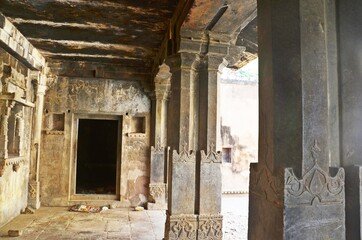
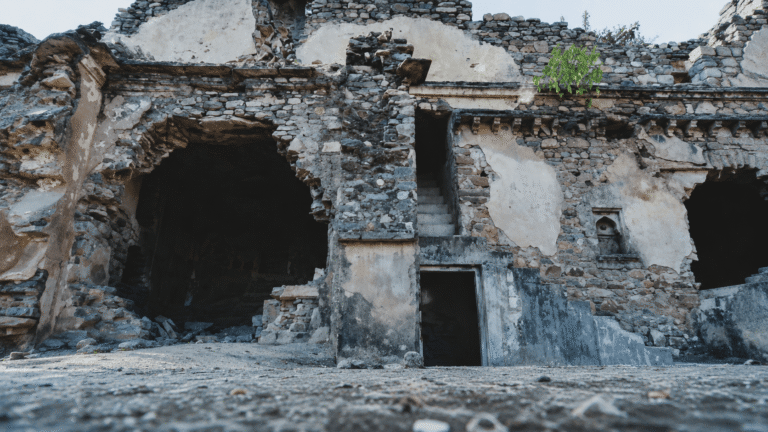
Bhangarh evening silence feels unusual because it does not arrive slowly. It happens when human movement drops, the site empties, and the fort’s natural sounds begin to stand out.
The kind that makes you notice your own footsteps. The kind that makes a distant bird call sound sharper than it should. The kind that makes people lower their voice without deciding to and once evening approaches, that feeling gets stronger.
That is why so many visitors ask the same question: Why does Bhangarh get so quiet in the evening?
The haunted answer is easy. The real one is better. Because Bhangarh’s evening silence comes from a combination of very specific things: official restrictions, sudden human absence, geographic isolation, changing sound conditions, wildlife movement, and the fact that the place is already carrying a curse narrative before you even arrive. None of that requires a ghost.
But it does explain why the silence feels heavier than it should.
The First Reason Is Simple: People Have to Leave
The most immediate reason Bhangarh gets quiet in the evening is also the most practical.
The Archaeological Survey of India (ASI) prohibits entry into the fort complex from sunset to sunrise. Warning boards at the site make this clear, and the restriction is treated as an official rule, not a suggestion.
That matters more than people realize. Because the moment visitors leave, the soundscape collapses.
No more:
– Tourist chatter
– Footsteps in groups
– Guides talking
– Phone speakers
– Casual movement through the ruins
The shift is abrupt. And abrupt silence always feels stronger than gradual silence.
The Silence Feels Unnatural Because Human Activity Stops All at Once
In most places, evening quiet develops gradually. At Bhangarh, it drops.
That’s a different experience.
A few minutes earlier, there are people moving through the temple zone, walking past Jauhari Bazaar, photographing the palace, watching monkeys on the walls.
Then they are gone.
No vendors settling in for the night. No nearby neighborhood noise drifting in. No traffic hum from an urban edge.
Just absence.
And the brain notices absence faster than it notices presence. That’s where the unease starts. That is why Bhangarh evening silence feels heavier than normal quiet. It is not one sound disappearing; it is the whole place changing its rhythm.
The Fort Is Geographically Isolated
Bhangarh is not sitting in the middle of a living town.
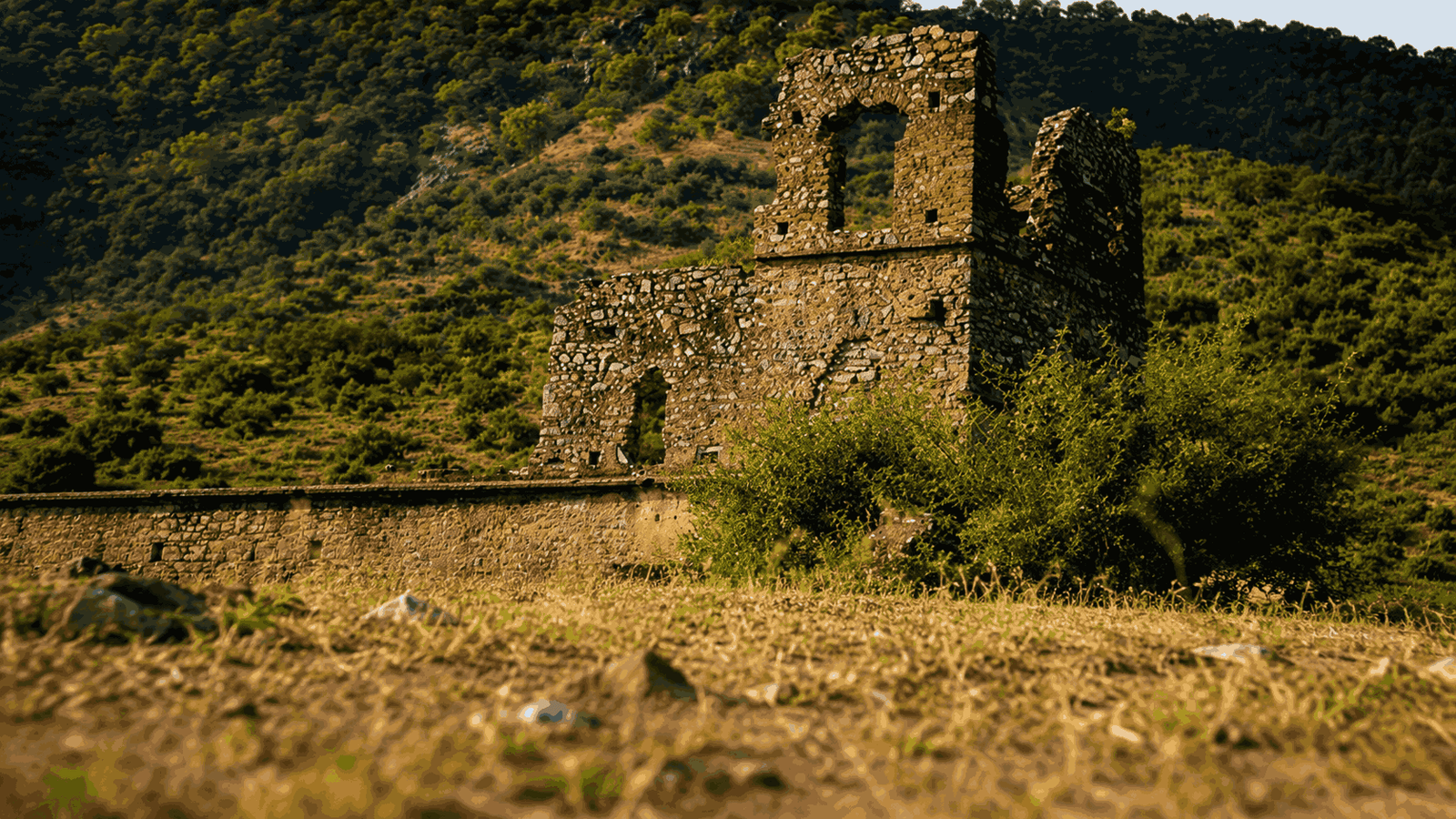
It stands in a relatively isolated setting near the Sariska Tiger Reserve, within the Aravalli terrain, away from dense residential activity. That means the fort does not have the normal background layer most places carry after dark.
No city noise. No market spillover. No residential buzz.
Part of the Bhangarh evening silence comes from the fort’s location. Once visitors leave, there is very little nearby human activity to soften the sound of wind, birds, animals, and movement through the ruins.
That isolation is one of the main reasons the evening silence feels so complete.
A place far from regular human sound does not become quiet the way a city becomes quiet.
It becomes exposed. And that difference matters.
Hills, Stone, and Open Space Change the Way Sound Behaves
Bhangarh’s terrain also affects how sound travels.
The fort sits among rocky slopes and open stretches where sound does not get masked by urban noise. Once human movement drops, smaller sounds begin standing out:
– Wind moving across stone
– Leaves shifting
– Birds calling from farther away
– Animals moving where you cannot see them
So the place is not actually soundless. It only feels that way at first.
What really happens is this: human noise disappears, and environmental sound becomes more noticeable.
That can feel uncanny because the brain expects familiar sound patterns. When those vanish, even ordinary natural sounds start feeling exaggerated.
Wildlife Activity Shifts After Dark
Bhangarh’s location near the Sariska landscape adds another layer.
As evening deepens, wildlife movement becomes more relevant. Some animals become more active in lower-light conditions, and in an environment where people are no longer present, the balance shifts further toward natural activity.
That doesn’t mean the fort becomes some dramatic animal corridor in front of visitors.
It means the area becomes less human and more ecological. And that changes what you hear.
A rustle no longer sounds like another visitor. A distant cry no longer feels easy to place.
Movement becomes audible before it becomes visible. That uncertainty adds tension to silence.
This Is Also Why the Restriction Is Practical, Not Mystical
A lot of people want the ASI restriction to be proof of something supernatural.
It isn’t.
The official ban after sunset makes practical sense because Bhangarh is:
– Isolated
– Difficult to monitor after dark
– Close to surrounding wildlife habitat
– Architecturally uneven and potentially hazardous
So yes, the rule contributes to the eerie atmosphere. But it was not created as a public acknowledgment of ghosts. That leap comes from folklore, not documentation.
Then Comes the Story Layer
And this is where Bhangarh becomes Bhangarh.
Because the silence does not arrive in a neutral space. It arrives in a place already loaded with story.
The most famous local legend is tied to Singhia, the tantrik said to have cursed the town after being rejected by Princess Ratnavati. In many retellings, that curse is used to explain not only the ruin of the settlement, but also the feeling that the place never fully returned to normal.
So once evening silence settles in, people do not hear it as mere quiet.
They hear it through that story.
The silence becomes:
– A sign
– A warning
– A residue of the curse
That’s the folklore layer doing its work.
Local Belief Makes the Silence Feel More Dangerous
You will also hear local claims that intensify the mood.
Some warn against staying after dark. Some say the area becomes a zone of restless spirits. Some repeat the old idea that those who remain inside at night never return.
These beliefs are part of Bhangarh’s oral mythology.
They are important culturally. But they are still beliefs, not verified fact. That distinction matters.
Because once a place already carries these warnings, every sensory detail gets reinterpreted through them.
Quiet no longer feels neutral. It feels inhabited.
The Psychology of Silence Is Powerful
Silence is one of the fastest ways to trigger alertness in the human mind.
When a place loses familiar noise, the brain does not automatically relax. It often does the opposite.
It becomes more attentive. More watchful.
More likely to assume that the absence of sound is hiding something.
This is especially true in places like Bhangarh, where the visual environment already suggests abandonment and uncertainty.
So the evening quiet is doing two things at once:
I- It removes ordinary sound cues
– It increases psychological sensitivity
That combination makes the silence feel larger than it is.
Why the Quiet Feels “Too Quiet”
People often say Bhangarh becomes “too quiet.”
Usually what they mean is not literal silence.
They mean the place loses the kind of sound that reassures them:
– Conversation
– Human movement
– Predictable activity
– Urban continuity
Once those disappear, the remaining soundscape feels incomplete. And incomplete environments tend to produce discomfort. That’s one of the reasons abandoned places unsettle people even when nothing unusual is happening.
The Haunted Interpretation Is Emotionally Stronger
Here’s the real issue.
The practical explanation makes sense, but the haunted one feels better.
Saying: “The fort gets quiet because the ASI clears it out, the terrain isolates it, wildlife becomes more active, and ambient human sound disappears”
is accurate. But saying: “The place goes silent because something changes after sunset”
is more emotionally satisfying. That’s why the myth survives.
Not because it is proven. Because it fits the feeling.
So Why Does Bhangarh Get So Quiet in the Evening?
Because several real things happen at once:
– The ASI restriction removes all human presence after sunset
– The fort’s geographic isolation cuts off normal background noise
– The Aravalli terrain and open stone environment change how sound is perceived
– Wildlife activity becomes more relevant as light drops
– Local legends about Singhia, Ratnavati, and the curse shape how people interpret the silence
– The brain naturally reads sudden quiet as a possible sign of threat
That is enough. More than enough, actually.
Final Thought
Bhangarh gets quiet in the evening because the place empties out, the land takes over, and the mind begins doing what it has always done in uncertain spaces: filling silence with meaning.
The curse story gives that meaning a shape. The terrain gives it a setting. The rule gives it authority.
And by the time the sound drops, most people are already ready to believe the quiet is saying something.
It usually isn’t. But it feels like it is.
And that feeling is exactly why Bhangarh’s silence stays with people.
For official travel context, Bhangarh Fort is also listed by Incredible India as a historic site in Alwar, Rajasthan.
Read Next:
- Bhangarh Expectation vs Reality: What People Actually Feel Inside the Fort
- A Walk Through Bhangarh in the Afternoon (Real Experience)
- Why Empty Places Feel Haunted: The Psychology Behind Bhangarh’s Eerie Atmosphere
For more articles on Bhangarh, haunted places, and Indian supernatural legends, explore the Myth Vs Reality Hub