
Why Places Like Bhangarh
Feel Haunted
It’s not what’s there. It’s how your mind responds to what’s missing.
And once you notice it… you can’t unsee it
People don’t just visit Bhangarh.
They react to it.
Even before hearing the full story. Even before reaching the main ruins. There’s usually a moment—quiet, subtle—where something feels off.
Not dramatic.
Not cinematic.
Just… different.
That’s where the Bhangarh fort mystery really begins.
Because the strange part isn’t that people hear ghost stories.
It’s that many people say they feel something even without seeing anything at all.
So the real question becomes:
Why does Bhangarh feel haunted, even when there’s no verified proof of anything supernatural?
The answer is less about ghosts—and more about how human perception works inside certain environments.
The Feeling Comes First. The Story Comes After.
Most people assume it works like this:
You hear the haunted story → then you feel afraid.
But in places like Bhangarh, it often flips.
You feel something → then the story explains it.
That distinction matters.
Because once the feeling is there, the explanation doesn’t need to be strong. It just needs to fit.
And Bhangarh offers an explanation that fits perfectly.
Is Bhangarh Really Haunted?
Sometimes the truth is stranger than fiction
The Architecture Is Designed to Amplify Emptiness
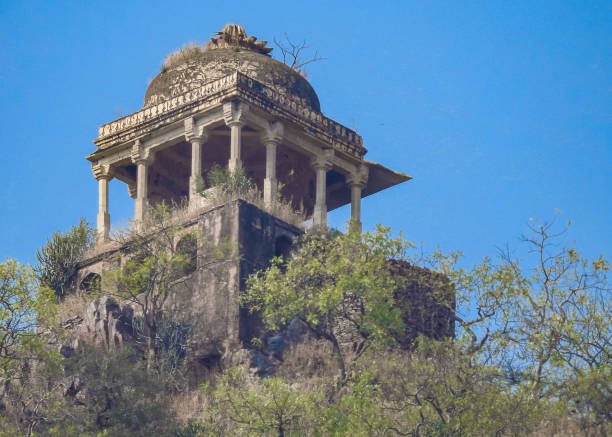
Bhangarh is not a small ruin.
It is a wide, open settlement with:
broken structures spread across a valley
long sightlines with no human movement
partially collapsed buildings
layered elevation leading up to the palace
This creates a strange spatial experience.
You can see far.
But there’s nothing happening.
That combination—visibility without activity—puts the brain into alert mode.
Because humans are wired to expect movement in built spaces.
When there isn’t any, the mind starts scanning harder.
That’s where unease begins.
🔗RELATED STORY
The reputation of Bhangarh is closely tied to a legend involving a curse.
Explore the full story →
Bhangarh The Untold Story
Stories, claims, and what people actually experience
Silence Is Louder Than Noise
One of the most commonly reported sensations at Bhangarh is silence.
Not complete silence—but the kind where:
wind sounds more noticeable
footsteps feel amplified
distant noises become hard to locate
the absence of human sound becomes obvious
This kind of silence is not neutral.
It’s interpreted by the brain as unusual.
In cities, silence signals something wrong.
In nature, it can signal danger.
So when Bhangarh goes quiet, especially in the evening, the brain reacts.
Not because something is there.
Because something should be there—but isn’t.
Is Bhangarh Really Haunted?
Sometimes the truth is stranger than fiction
Isolation Changes Perception
Bhangarh is not in the middle of a busy town.
It sits in a relatively isolated setting with:
limited surrounding activity
sparse human presence
open landscape
reduced external reference points
This matters.
Because isolation removes normal grounding cues.
You’re no longer anchored by:
traffic noise
crowds
artificial lighting
predictable movement
Without those, the brain starts filling gaps.
And what it fills them with depends on expectation.
Darkness Alters Everything
This is where things intensify.
As light drops, perception changes rapidly:
depth becomes harder to judge
shadows distort shape
peripheral vision becomes unreliable
movement detection becomes exaggerated
The same structure that looks neutral in daylight can feel threatening in low light.
Not because it changed.
Because your ability to interpret it did.
This is one reason the idea of Bhangarh after dark feels so much more intense than during the day.
Even without anything happening.
Expectation Bias Does the Rest
If someone walks into Bhangarh believing:
“This place is haunted”
Their brain adjusts instantly.
They become more sensitive to:
sound
movement
shadow
physical sensation
internal fear signals
This is called expectation bias.
You’re not imagining things.
You’re interpreting neutral stimuli differently.
A sound becomes a presence.
A shadow becomes movement.
A sensation becomes something external.
And because the brain is trying to make sense of it in real time, it often arrives at the most emotionally charged explanation first.
Fear Has a Physical Response
When people say:
“I felt something there”
They are often describing a real physiological reaction.
Things like:
increased heart rate
muscle tension
heightened alertness
subtle dizziness
the sense of being watched
These are not imaginary.
They are part of the body’s natural fear response.
But the cause is internal—not external.
The environment triggered the response.
The body reacted.
The mind assigned meaning.
The Role of Storytelling
Now add one more layer.
Before most visitors arrive, they’ve already heard:
the curse
the princess
the tantrik
the warning about sunset
So by the time they enter, the place is not neutral anymore.
It is loaded with narrative.
This matters more than people realize.
Because storytelling does not just inform experience.
It shapes it.
If you enter a silent ruin with no story, you might feel curious.
If you enter the same ruin believing it is cursed, you interpret every sensation differently.
That’s how bhangarh haunted mystery builds itself.
Not from one event.
But from repetition.
Why There Is No Verified Paranormal Evidence
Despite its reputation, there is no widely accepted, verified evidence of supernatural activity at Bhangarh.
Investigations, media explorations, and visitor accounts have documented:
atmosphere
emotional response
perception shifts
But not conclusive proof of paranormal presence.
That doesn’t invalidate people’s experiences.
It reframes them.
What people feel is real.
The cause may not be what they assume.
Why Abandoned Places Feel Haunted in General
Bhangarh is not unique in this effect.
Many abandoned places trigger similar responses because they share common elements:
decay
silence
lack of human presence
unclear history
visual irregularity
unpredictable acoustics
Together, these create what could be called a “haunted template.”
Bhangarh simply happens to fit it extremely well.
Why This Explanation Feels Less Convincing Than the Myth
Because it removes intention.
The psychological explanation says:
Nothing is there. Your brain is reacting.
The legend says:
Something happened here. That’s why it feels this way.
One is analytical.
The other is meaningful.
Humans prefer meaning.
So even when the environmental explanation is more grounded, many people still lean toward the story.
Not because it’s proven.
Because it feels right.
Final Thought
So why does Bhangarh feel haunted?
Because its environment—its ruins, silence, scale, isolation, and darkness—interacts with human perception in a way that naturally produces unease.
Add expectation.
Add storytelling.
Add cultural memory.
And the result is powerful.
A place where nothing verified may be happening…
but everything feels like it could.
That is the real mystery of Bhangarh.
Not what is there.
But why it feels like something is.
Read Next:
Is Bhangarh Fort Safe to Visit? What You Should Know Before Going
Why Is Entry Prohibited After Dark in Bhangarh?
The Psychology of Haunted Places: Why Expectation Changes What You Feel

FROM STORY TO CINEMA
This article is part of the research that shaped Bhangarh: In the Shadow of the Blood Moon. Not the myth as it’s told, but the experience as it’s felt.